Battery Cell Appearance Inspection
Battery cell appearance inspection: for scratches, dents, stains, terminal post damage and abnormal sealing edges on cylindrical/prismatic/pouch cell housings, multi-station + photometric stereo + 2.5D/3D combined imaging and two-stage AI judgement output OK/NG.
Application Overview
Multi-station inspection of cylindrical / prismatic / pouch cell cases
It inspects appearance defects on battery cell (cylindrical / prismatic / pouch) shells (scratches, dents, stains, leakage, terminal post damage); multiple stations plus 2.5D / 3D combined imaging are commonly used, with AI segmentation and classification as two levels of judgement.
The appearance of the battery cell housing directly affects consistency and safety risk (dents, leakage, terminal post damage); the part is three-dimensional and highly reflective, and a single view is prone to escape, so the industry generally uses multi-station combined imaging to cover the entire surface.
This station addresses the appearance of the battery cell housing, focusing on scratches, dents, smudges, terminal post damage and edge sealing anomalies; a combined imaging approach of multiple stations + photometric stereo + 2.5D/3D improves the detection of three-dimensional defects.
Inspection takes place at the finished battery cell process step, with multi-angle imaging part by part; the method uses AI segmentation to find defect regions and then classification to determine the grade. The specific stations and algorithms are adjusted according to the battery cell type (cylindrical / prismatic / pouch).
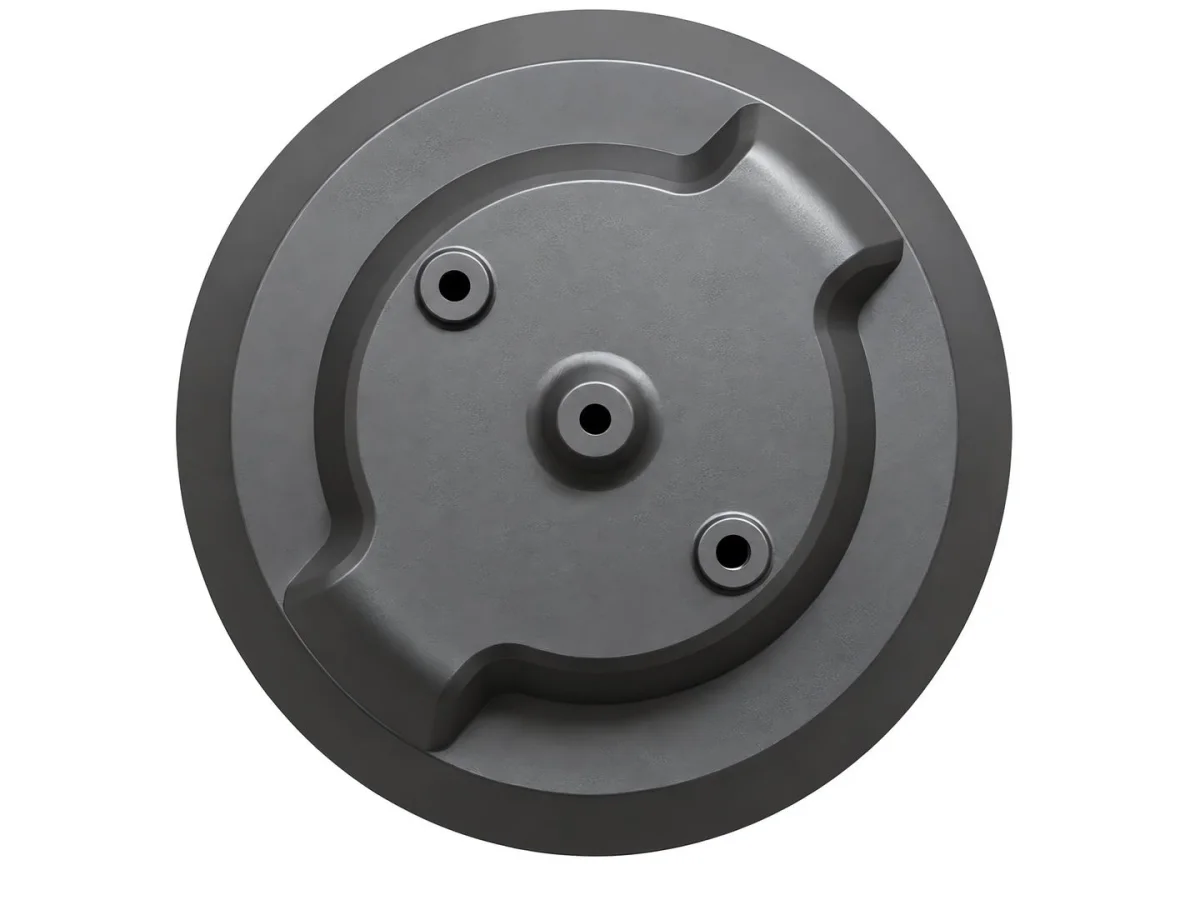
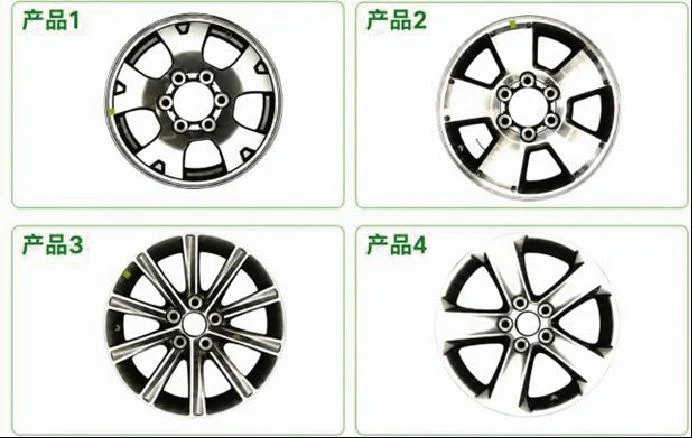
inspection Targets
What This Station Actually Has to Judge
| inspection item | Description |
|---|---|
| scratch | Linear surface scuffing |
| Dent / Bump | Housing dents, bulging |
| Stain / Fingerprint | Oil Stains, Discoloration |
| Terminal Post Damage | Terminal post scratches, deformation |
| Edge Sealing Anomaly | Sealing defect, excess adhesive |
| Leak Trace | Seepage Contamination |
| Dimension / Contour | Outline Out of Tolerance |
Why Inspect
Problems with manual visual inspection at this step
Battery cells have strong three-dimensional reflection, so a single view can neither capture the whole surface nor image three-dimensional defects clearly; only multiple stations combined with photometric stereo / 2.5D / 3D imaging can reliably cover the entire surface and distinguish bumps from dents.
Dents, terminal damage and leakage are safety risks with a high cost of escape, requiring graded judgement and traceable records.
- Three-dimensional reflections escape a single view
- Dents and leakage are a safety risk
- Requires graded judgement and traceability
- Different part types use different stations
How Inspect
Stations and Inspection Chain
- 01 Battery cell loading and positioning
- 02 Multi-station, multi-angle imaging
- 03 Photometric stereo captures surface topography
- 04 2.5D/3D to Cover 3D Defects
- 05 AI segmentation of defect regions
- 06 Classify and judge the defect grade
- 07 OK/NG output
- 08 Interlocking rejection/sorting
- 09 Image and data archiving
How to Inspect
For battery cell housings, multiple stations plus photometric stereo and 2.5D/3D combined imaging cover the entire surface; AI first performs pixel-level segmentation to find defect regions, then classifies them to determine the grade, which is two-stage algorithm imaging.
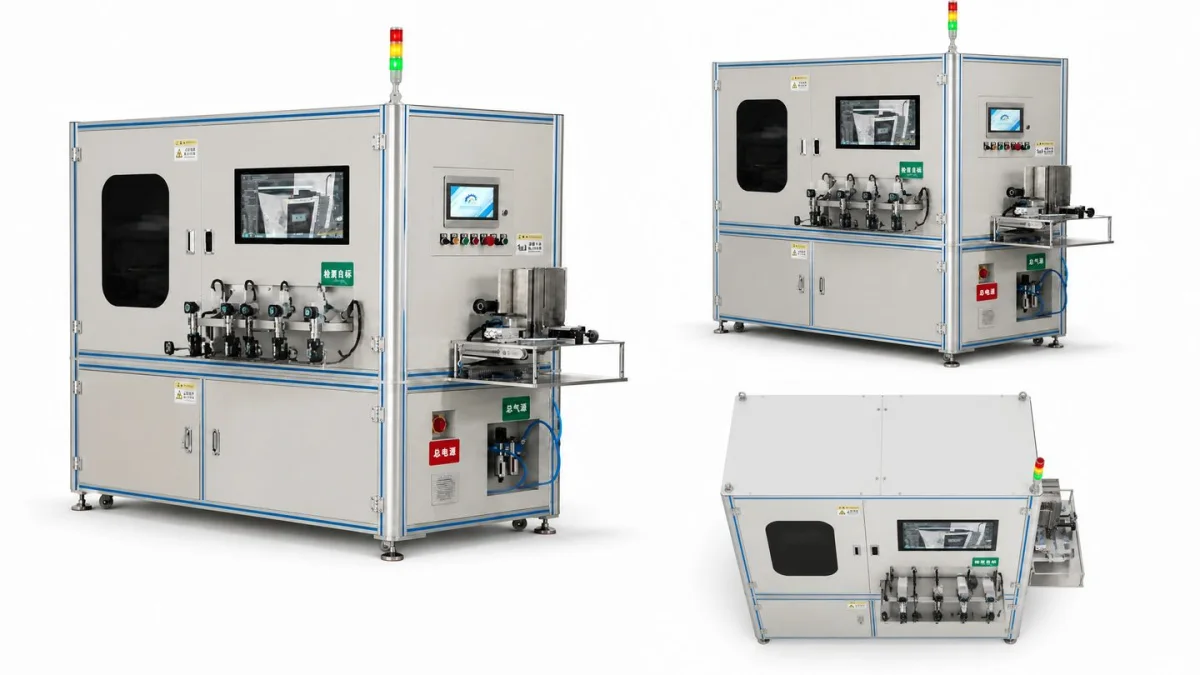
inspection defect
| Defect Types | Typical Manifestations | Inspection Focus Points |
|---|---|---|
| scratch | Linear Scuff | Photometric Stereo |
| Dents | Dents, Bulging | 3D / Photometric Stereo |
| stain | Oil Stains, Discoloration | Diffused Light |
| Terminal Post Damage | Scratch, Deformation | Multi-angle |
| Edge Sealing Anomaly | Seal Adhesive Overflow | Contour Comparison |
| Leakage | Seepage Contamination | Segmentation |
| Contour Anomaly | Outline Out of Tolerance | Telecentric Measurement |
Applicable equipment
Application Industry
Common Question
Why Use Multiple Stations for Battery Cell Appearance Inspection?
Can It Replace Manual Visual Inspection?
What inspection accuracy and cycle time can be achieved?
How Do You Distinguish Dents from Scratches?
Can Pouch and Cylindrical Cells Use a Single Solution?
Are results traceable?
Do I Need to Re-Tune When the Battery Cell Model Changes?
Submit sample testing
Typical OK/NG cell samples can be sent for a measured trial: the multi-station layout and photometric stereo / 3D imaging solution are determined by the cell type.
Submitted successfully
We have received your sample testing request. A solution engineer will contact you within 1 business day via contact you.
Need to assess imaging conditions, defect criteria and cycle time item by item? Go to the Full Requirement Assessment →
Can This Application Be Done? Sending a Sample for Testing Is the Most Direct Answer
Incoming material, part orientation and cycle time vary widely from factory to factory. Send us real samples and we will run imaging and judgement validation against your production line conditions, then give you a configuration proposal you can actually implement.