Non-Woven Fabric AI Visual Inspection Equipment
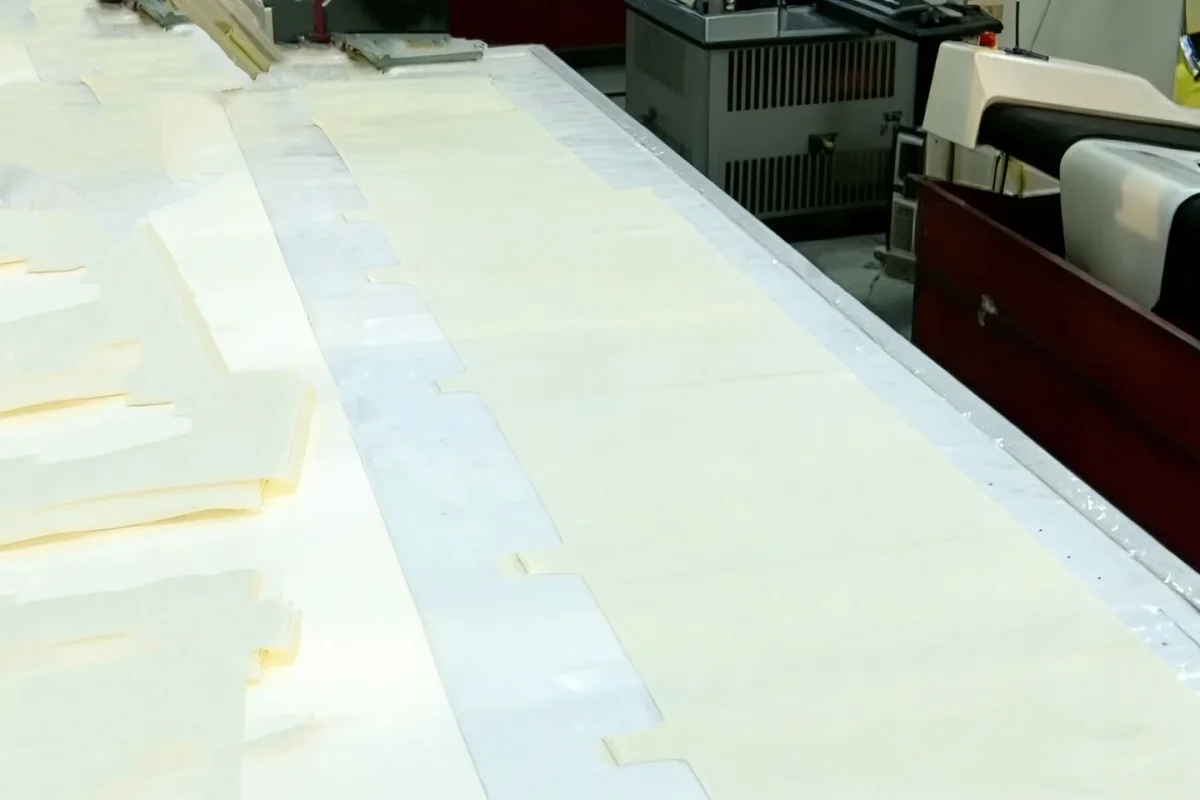
Non-woven fabric AI visual inspection equipment targets non-woven fabric with randomly distributed fibers, performing inline inspection of holes, thin spots, thick spots, foreign matter, stains, delamination and other defects, with OK/NG output and production line interlocking.
Materials Overview
Fiber randomness creates high background noise, the biggest interference in inspection
Non-woven fabric AI visual inspection equipment images non-woven fabric, and the algorithm identifies defects such as holes, thin spots, thick spots, foreign matter, stains, and delamination against the random fiber texture background, outputs OK/NG results, and interlocks with the production line. It is suitable for continuous roll inspection.
Non-woven fabric is not warp-and-weft interlaced; the fibers are laid randomly into a web and then bonded into cloth, so the surface has no regular texture, only a random fiber distribution. This "lack of structure" is precisely the difficulty: there is no periodic model to align to, the background noise is inherently high, and a fixed threshold very easily misjudges normal variation in fiber density as a defect.
Common defects in non-woven fabric include holes, thin spots (locally thin areas), thick spots (clumps), foreign matter (metal, plastic, impurities), stains, and delamination (poor bonding). Among these, uneven thickness is a matter of degree and requires statistical judgement rather than a binary decision.
Non-woven fabric is widely used in medical, filtration, hygiene and packaging applications and is mostly produced at high speed in roll form. For inspection, AI has to learn "the statistical features of the normal random background", then classify significant deviations as defects and suppress over-rejection caused by fiber noise as far as possible.
Applicable Type
Spunbond Non-woven Fabric
Fiber web forming, with the focus on thick and thin spots and foreign matter
Meltblown Non-woven Fabric
Microfiber, with the focus on evenness and holes
Spunlace Non-woven Fabric
Entangled bonding, key points: delamination and stains
Needle-punched Non-woven Fabric
Mechanical bonding, key points: thickness and holes
Non-woven Fabric Roll Stock
Continuous material feed, line-scan full-width inspection
Common defect
| Defect Types | Typical Manifestations | Inspection Focus Points |
|---|---|---|
| hole | Missing fiber forming holes | Transmitted or low-angle light |
| Thin spot | Localized Thin Areas | Grayscale statistics judgement |
| Thick Spots / Clumps | Localized fiber accumulation | Distinguished from random background |
| foreign matter | Metal, plastic, impurities | High-contrast Features |
| Stain / Oil Spot | Oil Stains, Color Spots | Contrast Against Base Color |
| Delamination / reinforcement defect | Interlayer Separation | Focus on the Edges |
| Selvedge defects | Web-width edge defect | Must Cover Full Width |
| wrinkle | Feed Wrinkles | Distinguish From Defects |
inspection Workflow
Complete chain from loading to judgment
- 01 Non-woven roll loading and unwinding
- 02 Flattening and tension control
- 03 Line-scan continuous imaging
- 04 Random background modeling
- 05 Local anomaly segmentation
- 06 Defect classification and grading
- 07 Web-width edge inspection
- 08 Synthesized OK / NG
- 09 Marking / rejection and image archiving
AI Inspection Principles
AI Visual Inspection Principles
Non-woven fabric has no regular texture, so inspection relies on "statistical anomaly" rather than "periodic comparison". The algorithm learns the grayscale / texture statistics of the normal random fiber distribution and judges significant deviations (holes, thick spots, foreign matter) as defects. The difficulty is the high background noise; balancing over-rejection against escapes depends on sample training.
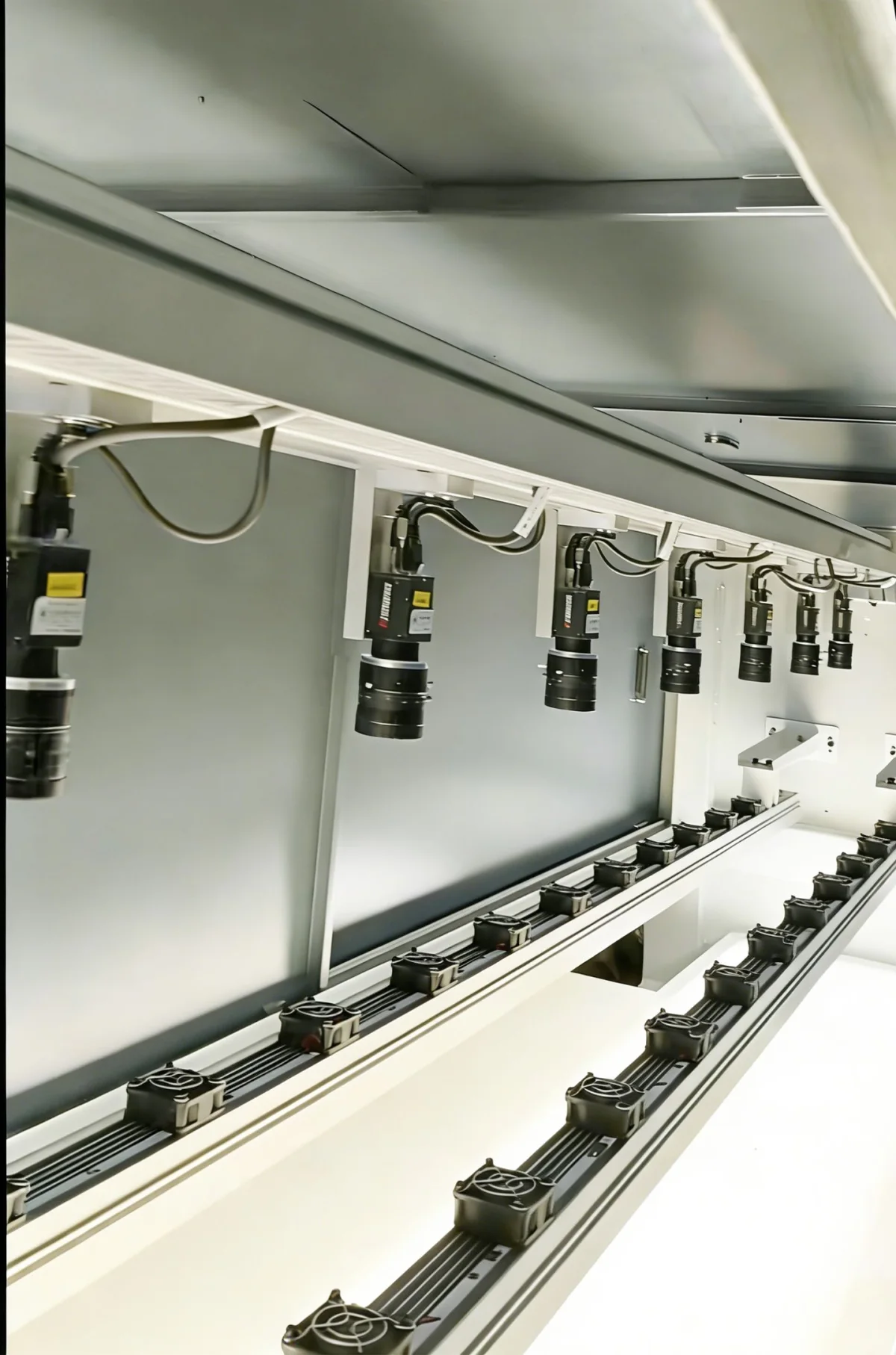
For illumination, diffuse light provides uniform lighting and reveals thickness variation and stains; backlight / transmitted light highlights holes and foreign matter; low-angle light exposes surface relief. Different gram weights and colors require separate lighting setups.
For judgement, use area statistics (such as local mean and variance) instead of single-point thresholds, and grade uneven thickness by degree. The specific thresholds must be confirmed by measurement on OK / NG samples to keep fiber-noise false calls down.
Applicable Industry
Applicable equipment
Common Question
Non-woven fabric has no grain, so how do you avoid misjudging normal fibers as defects?
Can Uneven Thickness Be Judged?
Can meltblown ultra-fine fibers be inspected?
Can poor internal reinforcement be detected?
What is the inspection accuracy?
What samples are needed to develop a solution?
Can It Be Integrated Into an Existing Production Line?
Submit sample testing
Send us OK and NG samples of non-woven fabric in different grammages and colors, and we will carry out random background modeling and measured defect testing to recommend an illumination solution and grading.
Submitted successfully
We have received your sample testing request. A solution engineer will contact you within 1 business day via contact you.
Need to assess imaging conditions, defect criteria and cycle time item by item? Go to the Full Requirement Assessment →
Send Us Your Material and We Will Show You the Measured Results
Provide several OK and NG samples of the material, and a solution engineer will run actual imaging and judgement tests on the equipment to give a workable inspection configuration recommendation, rather than reading the datasheet alone.