Seal Ring Presence/Absence Inspection
Judges whether oil seals, seal rings and dust seals are properly seated, missing or of the wrong model, for seal assembly and unit assembly stations.
inspection Overview
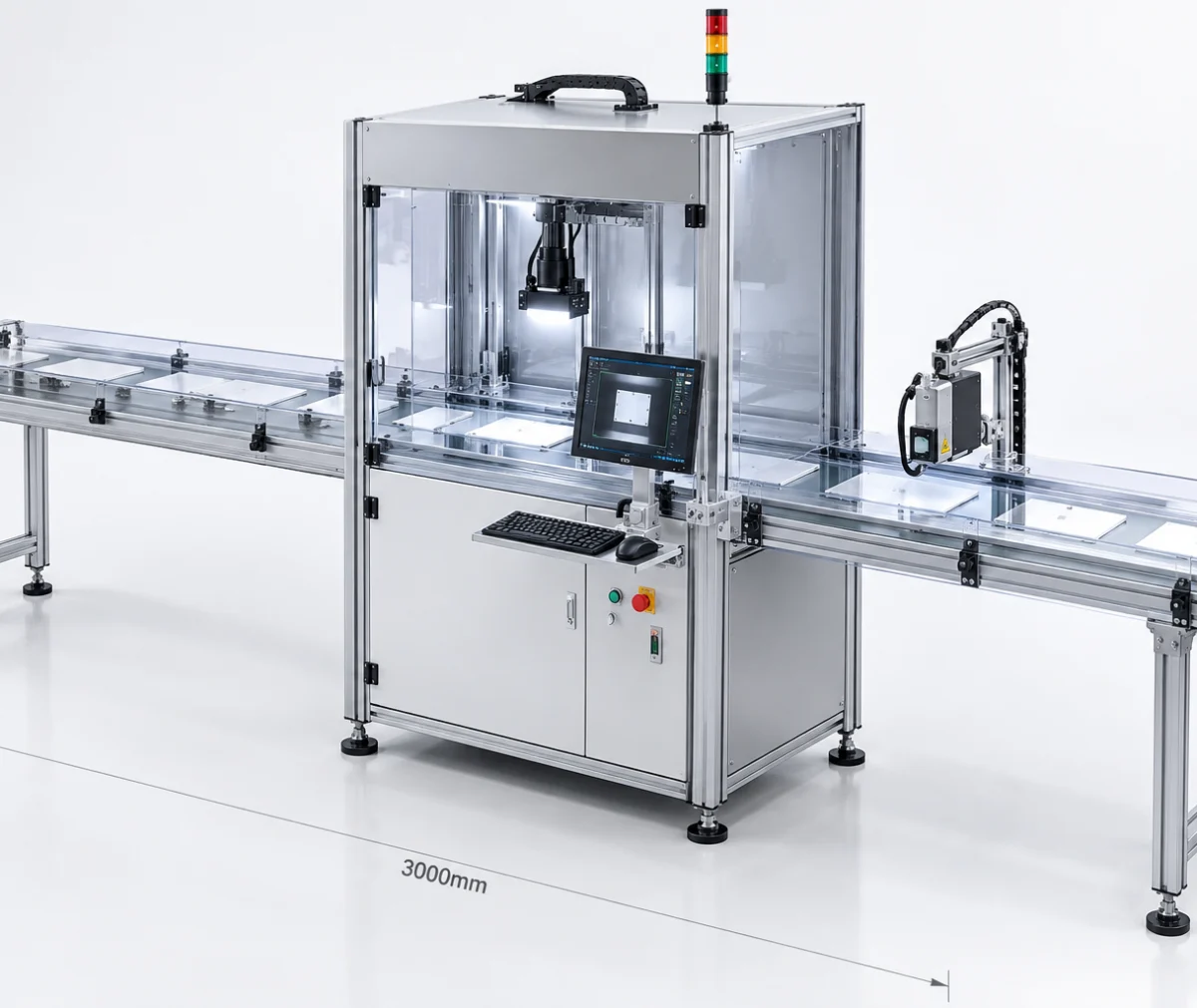
Seal ring presence/absence inspection: determine whether oil seals, seal rings, dust rings and similar parts are assembled correctly, are missing, or are of the wrong model; applicable to seal assembly and assembly stations. The judgement usually does not check details such as threads or dimensions, but rather determines Whether the visual feature at that position exists and matches expectations, output OK / NG and interlock with the production line.
Verifies whether oil seals, seal rings, dust rings, and similar parts are fully seated, missing, or of the wrong model; applicable to seal assembly and final assembly stations.
The feasibility of "seal ring presence/absence inspection" depends on Whether the visual features of the object are stable and distinguishable, as well as the on-site optical and tooling conditions. Each item is expanded below in the order commonly used in inspection engineering.
Object Characteristics
How the object appears in the image
- Many specifications look similar; different models may differ only in inner diameter or cross-section
- After assembly it often sits flush against metal parts, with the boundary revealed by material difference
- Seals with a direction requirement (such as lip seals) fail functionally if installed in reverse
- Some seals have a metal frame, so their reflection characteristics differ from those of pure rubber parts
inspection Challenges
Where Problems Really Occur on Site
- Seals with similar models are hard to tell apart, so a stable distinguishing feature must be found
- Seals with a metal skeleton are highly reflective and hard to separate from metal workpieces
- The visible area of the seal ring inside an assembly gap is limited
- Directional features (lip orientation) are not visible in a top-down view
Vision Judgement method
How acceptance criteria are set and why
Presence/absence judgement depends on Material difference at the joint: Rubber seals and metal parts usually differ in reflection characteristics and texture, and this difference can be used to judge presence/absence.
If the direction must be judged, the directional features of the lip or the metal case have to be observed, which usually requires a side view or a split station.
Applicable algorithm
Choose by the Form of the Acceptance Criteria, Not by Complexity
Regional Feature Comparison
Determine whether the material characteristics of a seal are present at the mating surface
Contour / Dimensional Measurement
Distinguish similar models by measuring inner or outer diameter
Optical Precautions
Imaging conditions set the upper limit of feasibility
- Diffused light helps stabilize reflections from metal parts and makes rubber part features easier to separate
- For seals with a metal frame, adjust the angle to avoid specular reflection
- If orientation must be judged, a viewing angle that can see the lip is specially designed
OK / NG Output
How results are judged and passed to the production line
| Inspection Status | judgement | Interlocking Action |
|---|---|---|
| Seal in place with the correct model and orientation | OK | release |
| No seal detected | NG | Block as missing part |
| Model / orientation mismatch | NG | Treat as wrong part |
Applicable Industry
This type of inspection is common in the following industries
Common Question
The most common questions about this object
Can a Reversed Seal Ring Be Detected?
It depends on whether the orientation feature (such as the direction of the lip) can be observed. A top-down angle usually cannot show orientation; a side view or special tooling is needed to expose the feature. If it is structurally invisible, error-proofing must be built into the assembly process rather than relying on vision.
How Do You Distinguish Seal Rings of the Same Specification but Different Materials?
Material differences sometimes show up in reflection characteristics, but they cannot always be distinguished reliably. If two materials look visually similar, we recommend adding mistake-proofing in the material handling step, or asking the supplier to add an identifiable mark.
What are the acceptance criteria for this object?
Presence/absence judgement relies on the material difference at the bonded interface: rubber seals and metal parts usually differ in reflection characteristics and texture, and that difference can be used to judge whether the part is present.
What are the illumination requirements for this type of object?
Diffused light helps stabilize the reflection from metal parts and makes the features of rubber parts easier to separate. For seals with a metal frame, the angle should be adjusted to avoid specular reflection.
What Are the Inspection Accuracy and Minimum Detectable Size?
It depends on the combination of field of view and camera resolution, and is affected by the lens, illumination and algorithm. To be added — the configuration must be derived from your minimum defect size, subject to the results of a measured sample trial.
How Do We Verify That Our Product Can Be Detected?
Please provide correctly assembled parts and parts with missing or reversed components, and state whether visually similar specifications must be distinguished.
Submit sample testing
Please provide correctly assembled parts and parts with missing or reversed components, and state whether visually similar specifications must be distinguished.
Submitted successfully
We have received your sample testing request. A solution engineer will contact you within 1 business day via contact you.
Need to assess imaging conditions, defect criteria and cycle time item by item? Go to the Full Requirement Assessment →
Send Us Your Workpiece and We Will Show You the Measured Results
Provide several OK and NG samples, and the solution engineer will run actual imaging and judgement tests on the equipment, then give inspection configuration recommendations that can be implemented, rather than just reading a specification table.