Knitted Fabric AI Visual Inspection Equipment
AI visual inspection equipment for knitted fabric: inline inspection of loop-structured knitted fabric for dropped stitches, holes, needle lines, horizontal bands, oil stains, color difference and other defects, with OK/NG output and line linkage.
Materials Overview
Loop structures are highly elastic and prone to deformation, so positioning must prevent stretching
The knitted fabric AI visual inspection equipment images the surface of the knitted fabric, and the algorithm identifies defects such as dropped stitches, holes, needle marks, barré, oil stains and color difference, outputting an OK/NG result and interlocking with the production line; it is suitable for both roll and cut-piece formats.
Knitted fabric is formed by interlooping stitches, so it is naturally elastic, easily stretched and deformed, and the fabric surface also curls at the edges. These characteristics make knitted fabric harder to inspect than woven fabric: once the material is pulled askew during transport, the loop texture shifts as a whole, and the algorithm must first position it stably and then judge, otherwise normal stretching is misjudged as horizontal barring or needle lines.
Defects specific to knitting include dropped stitches, holes, irregular stitches (distorted loop formation), horizontal bars (horizontal streaks caused by yarn or knitting), oil stains, color differences, and curled-edge damage. Horizontal bars and irregular stitches are the most easily confused with the normal loop cycle, so the loop cycle must be modeled.
The same equipment can cover continuous roll inspection and piece-by-piece cut-piece inspection. Changing the yarn count or the knit structure (plain, rib, jacquard) mainly means adjusting illumination and algorithm recipes, and when stitch density changes the pixel equivalent must be updated as well.
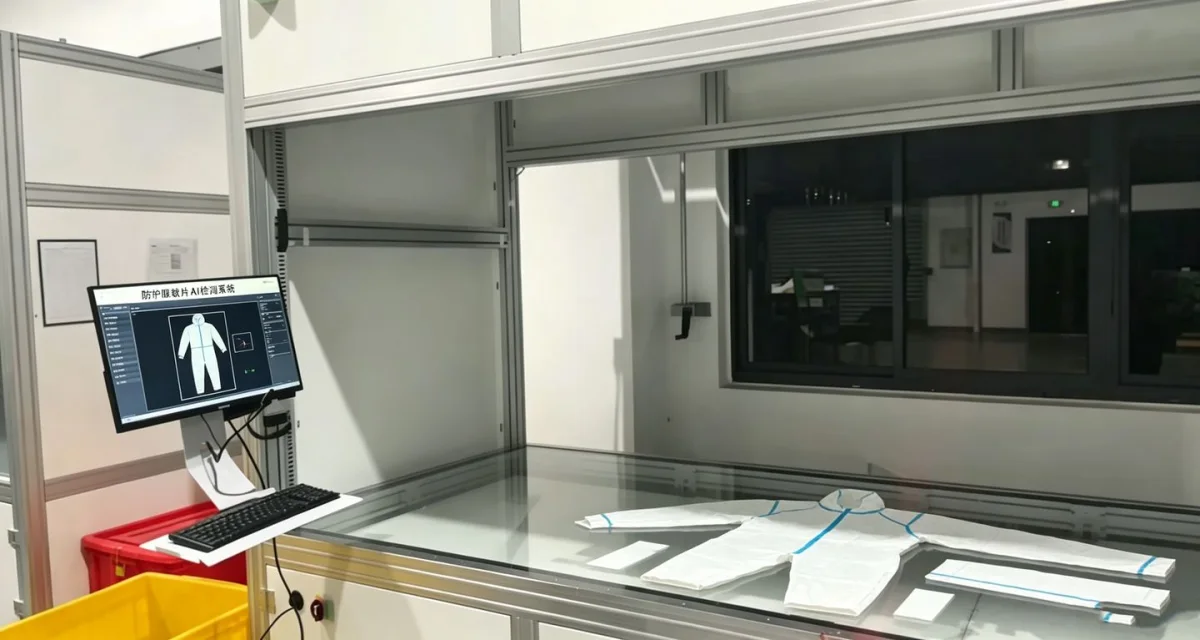
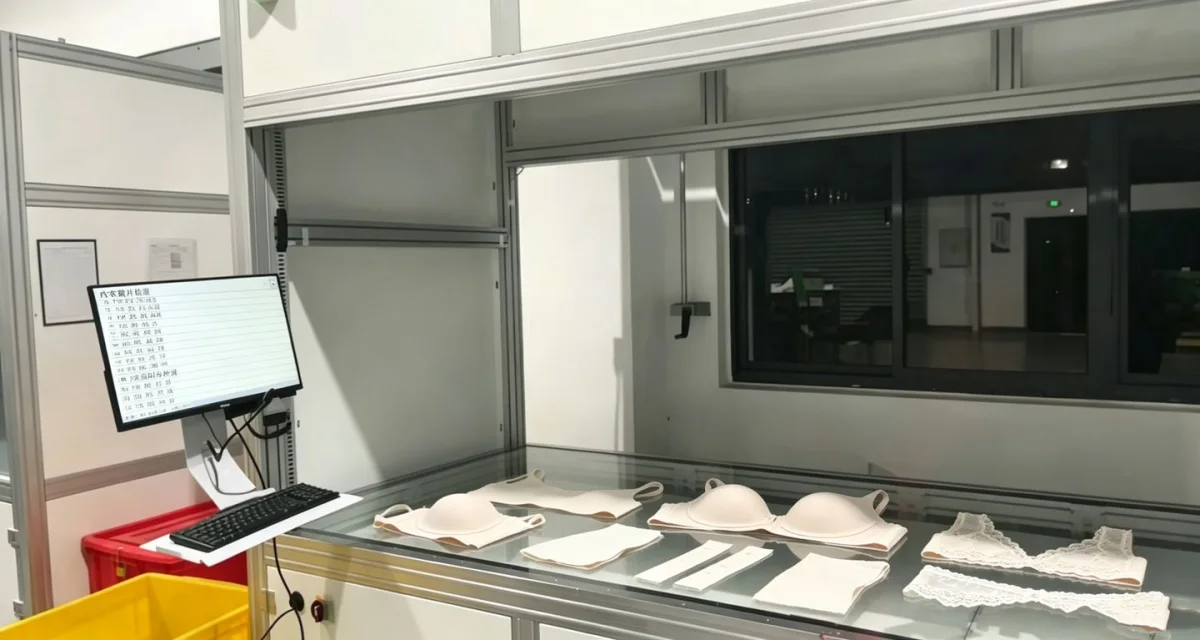
Applicable Type
Plain Knit
Single-sided knit, with a focus on dropped stitches and holes
Rib Knit
Double-sided knit, with a focus on mis-stitches and horizontal bars
Jacquard Knit
Patterned knit, with a focus on pattern matching and color difference
Stretch Knit
Highly elastic and easily deformed; high positioning requirements
Knitted Cut Pieces
Already cut, inspected piece by piece with defect locating
Common defect
| Defect Types | Typical Manifestations | Inspection Focus Points |
|---|---|---|
| Dropped stitches | Dropped loops, missing wales | Compared against the loop pitch |
| hole | Broken loops forming holes | Backlight Is the Most Direct |
| Mis-stitch | Irregular loop shape | Requires a normal loop model |
| Horizontal bars | Transverse streaks, bar marks | Distinguish normal cycles from anomalies |
| Oil Stain / Dirt | Oil Spots, Stains | Contrast Against Base Color |
| color difference | Inconsistent shade within the same batch | Stable light source and color datum |
| Edge Curl Damage | Edge curling, indentation | Focus on the Selvedge |
| Foreign Matter / Neps | Stray Fibers, Knots | Distinguish From Nap |
inspection Workflow
Complete chain from loading to judgment
- 01 Knitted fabric loading / roll unwinding or cut-piece feeding
- 02 Flattening and anti-stretch tension control
- 03 Triggered Imaging
- 04 Loop cycle positioning
- 05 Region segmentation and defect segmentation
- 06 Defect classification and grading
- 07 Dimension / contour judgement (optional)
- 08 Synthesized OK / NG
- 09 Marking / rejection and image archiving
AI Inspection Principles
AI Visual Inspection Principles
Knitted fabric inspection must first "align to the loop cycle" before looking for anomalies. The algorithm builds a periodic model of the normal loop texture and classifies local deviations from the period as defects such as dropped stitches, tuck stitches and horizontal bars. Success depends on stable feeding — stretching and skewing directly create false calls.
For illumination, diffused light provides even lighting and makes oil stain and color difference visible; low-angle light exposes surface relief and hem indentations. Stains on dark knitwear and holes on light knitwear need separate lighting setups, usually with recipes grouped by color.
For judgement, stabilize the conveying tension and reduce stretching first, then let the algorithm run. Thresholds for horizontal bars and dropped stitches must be measured with OK / NG samples to avoid judging normal structural variation as a defect.
Applicable Industry
Applicable equipment
Common Question
Can stretching deformation of knit fabric cause false calls?
How are horizontal bands distinguished from the normal knitting cycle?
Can Elastic Knit Fabric Be Inspected?
Can It Detect Internal or Back-Side Defects?
What is the inspection accuracy?
What samples are needed to develop a solution?
Can It Be Integrated Into an Existing Production Line?
Submit sample testing
Send us OK and NG samples of knitted fabric with different structures and colors, and we will carry out loop-period modeling and measured defect testing, then give recommendations on anti-stretch feeding and the illumination solution.
Submitted successfully
We have received your sample testing request. A solution engineer will contact you within 1 business day via contact you.
Need to assess imaging conditions, defect criteria and cycle time item by item? Go to the Full Requirement Assessment →
Send Us Your Material and We Will Show You the Measured Results
Provide several OK and NG samples of the material, and a solution engineer will run actual imaging and judgement tests on the equipment to give a workable inspection configuration recommendation, rather than reading the datasheet alone.