Skipped Stitch and Poor Stitching Visual Inspection
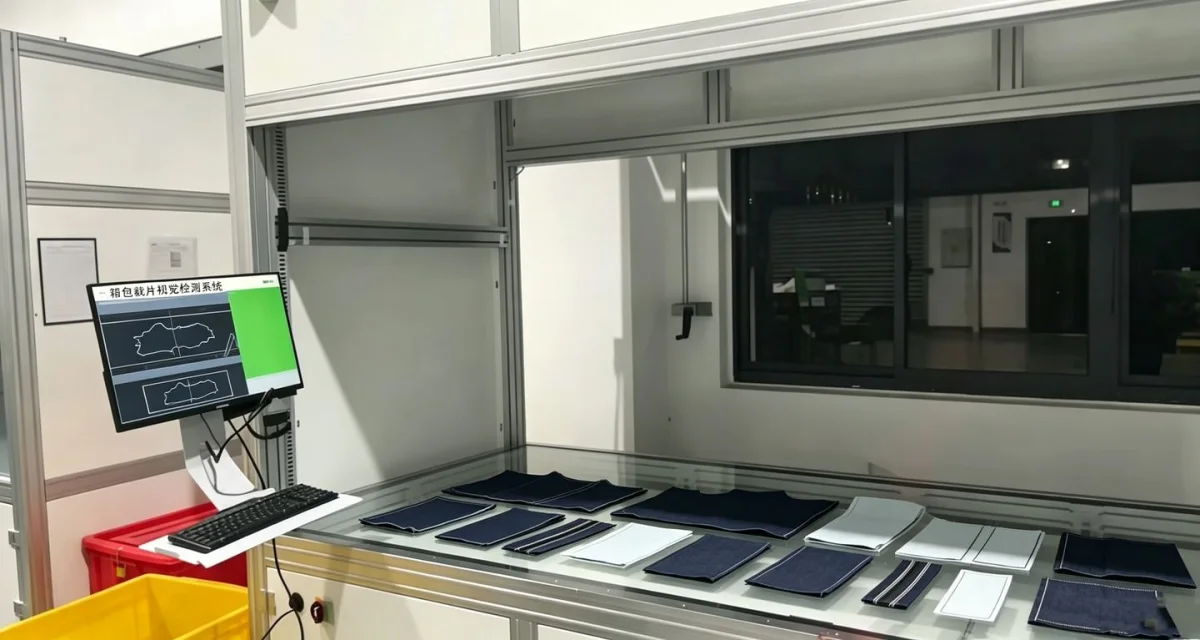
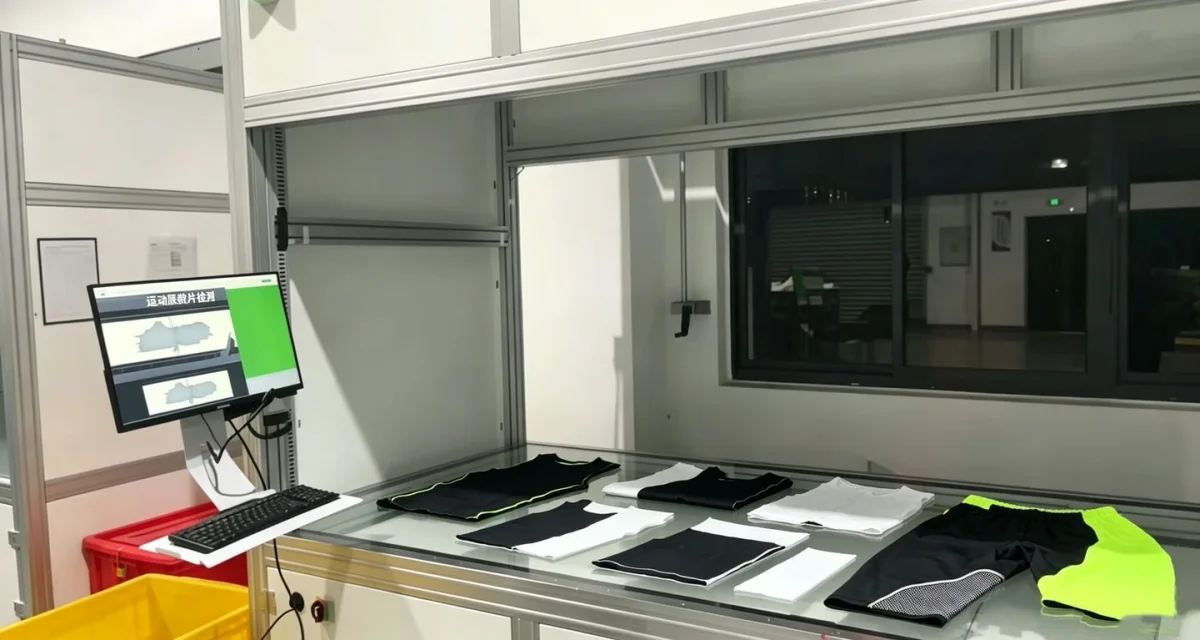
Skipped stitch and poor stitching visual inspection: for skipped stitches, loose threads and uneven stitch pitch in sewing, quilting and wrapping processes, diffuse light forms a clear image of stitch path direction, distinguishing designed stitch patterns from real skipped stitches.
defect Overview
Stitch continuity and stitch pitch consistency, where the difficulty is distinguishing a designed decorative stitch from a true skipped stitch
Skipped stitch and poor stitching mean that the thread fails to catch the base fabric over a section (skipped stitch), floats (loose stitch) or has a clearly uneven stitch length. Under uniform diffuse light, the seam appears as a continuous, high-contrast linear feature, and whether its direction and spacing are regular can be judged directly. Machine vision detects on this basis; the main risk is misjudging intentional decorative stitching or intermittent stitching as skipped stitches, so the threshold must be defined by the quality department according to the sewing process.
A skipped stitch appears in the image as an interruption in the direction of the seam, or a section of thread lying on the surface without being embedded. A normal continuous seam is a regular, evenly spaced line; at a skipped stitch there are break points, loose loops lying on the surface, or a sudden change in the spacing between adjacent stitches. Continuity is the core criterion.
Poor stitching also includes uneven stitch spacing, skewed seam lines and exposed bobbin thread; the essence is "whether the seam is regular." These defects have relatively low lighting requirements — uniform diffuse light is enough for the stitching to form stable contrast with the base fabric — and the difficulty lies more in the judgement logic than in imaging.
Decorative stitching and interrupted process seams (such as certain quilted patterns) are part of the normal design and must not be judged against a continuous seam. Judgement must first know the stitch pattern of that station and the positions where interruption is allowed, comparing against a template or pattern file, and only skipped stitches and floating threads that deviate from the pattern are judged as defects.
Occurrence Causes
Only when the cause is known can you decide which station should check for it
- Sewing equipment: curved needle / rotary hook timing offset and uneven tension causing skipped stitches and loose threads
- Needle and fabric mismatch: unsuitable needle size, thread diameter or fabric thickness causes thread breakage and skipped stitches
- Operation and alignment: poor alignment at start and end stitches and seams causing stitch length jumps
- Design stitching: decorative stitching and interrupted process stitching are normal and must be excluded by template
- Downstream damage: ironing stretch and handling snags loosen the stitches
imaging Key Points
Whether it can be detected depends first on whether it can be captured
Uniform Diffused Light
The stitching forms stable contrast against the backing fabric, which suits continuity judgment on regular stitch runs
Color contrast enhancement
Where the thread color is close to the backing fabric, adjust white balance or the waveband to improve contrast
Pattern Template
Register the stitching pattern and allowed interruption positions to avoid false rejection of decorative stitches
Local Magnification
For stitch pitch and float details, increase local resolution for interpretation
judgement Method
The judgement centers on "stitch continuity and stitch length consistency". First register the stitch path against the pattern template, then detect breaks, loose-thread arcs and sudden stitch length changes. Only skipped stitches and loose threads that deviate from the template pattern are judged as defects.
Threshold biasing: an occasional skipped stitch on a visible part may only affect appearance, while on a structural part it affects strength, and the costs are asymmetric. The stitch length tolerance and the skipped-stitch rejection limit should be defined by the quality department according to the process and saved with the recipe.
| Judgement Dimension | Description |
|---|---|
| Continuity | Whether the stitch line has breaks, and the break length and count |
| Stitch pitch | Deviation of adjacent stitch spacing from the standard |
| Floats | Length and height of loose wire arcs on the surface |
| Pattern Matching | Whether it deviates from the registered stitch pattern and interruption positions |
| Position | Visible surfaces and load-bearing structural surfaces use different rejection criteria |
Applicable algorithm
Stitch Tracking
Track continuity along the seam path to detect breakpoints and loose threads
- Suited to regular continuous seams
- Pattern registration is required first
Stitch Pitch Statistics
Measure the spacing between adjacent stitches and analyze the mean and abrupt changes
- Flag out-of-tolerance as anomaly
- Judged together with position
Pattern Comparison
Compare the stitches to be inspected against a template / pattern file to exclude decorative stitching
- Avoid false rejection of design seams
- Recipe recalled on pattern change
Common Materials
Common Industry
Common Question
How is a skipped stitch identified in the image?
Can Decorative Stitching Be Misjudged as Skipped Stitches?
Is Inspection Reliable When the Thread Color Is Close to the Backing Fabric?
Does Uneven Stitch Spacing Count as a Defect?
Can stitching on wrapped parts be inspected?
What Is the Shortest Float That Can Be Detected?
Does Switching the Stitching Pattern Require Reconfiguration?
Submit sample testing
Skipped stitch and poor stitching inspection centers on stitch continuity and stitch length, using pattern templates to exclude decorative stitching.
Submitted successfully
We have received your sample testing request. A solution engineer will contact you within 1 business day via contact you.
Need to assess imaging conditions, defect criteria and cycle time item by item? Go to the Full Requirement Assessment →
Send Us Your Defect Samples and We Will Measure Them and Show You the Results
Whether a defect can be detected depends on whether imaging captures the defect features. Provide OK and NG samples and we will run actual imaging and judgement tests on the equipment.