Packaging Accessories Presence/Absence Inspection
Verifies that all required accessories are complete inside the packaging, covering accessory kits, cables, tools, instruction manuals and other items.
inspection Overview
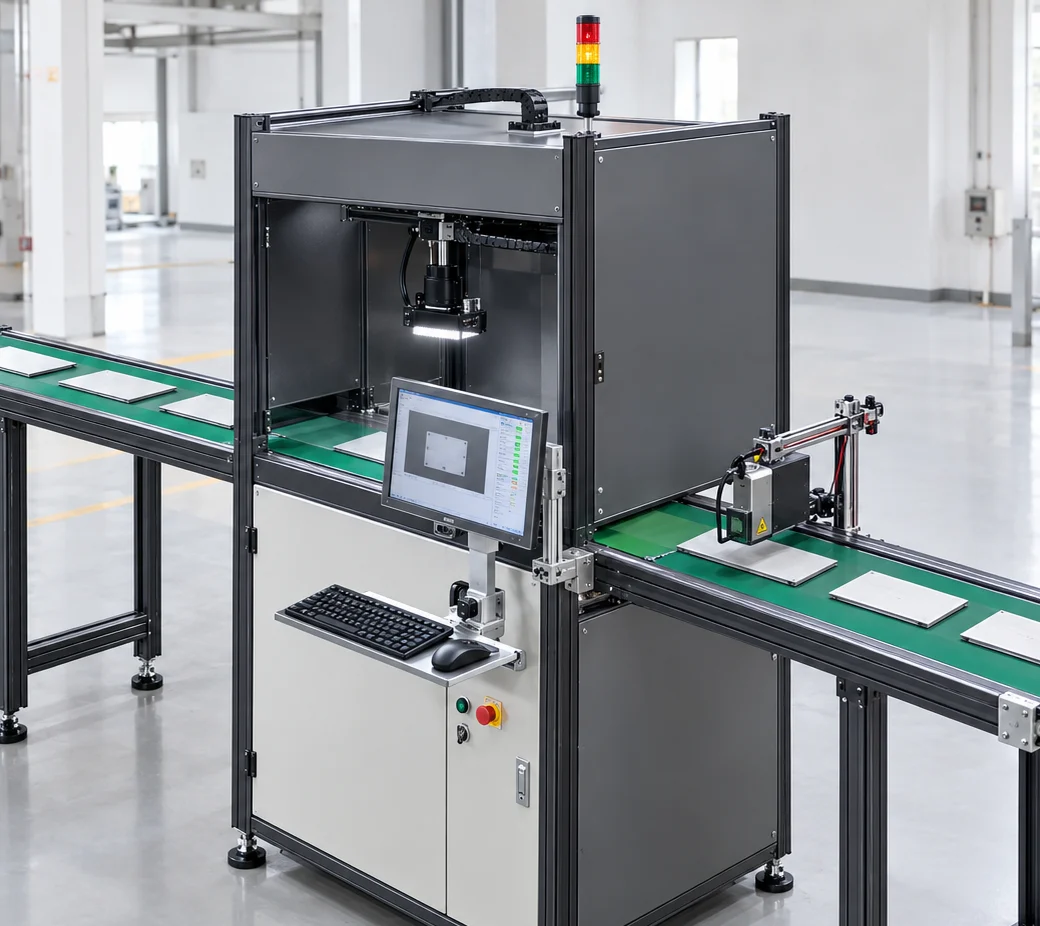
Packaging accessories presence/absence inspection: verifies whether all accessories that should be in the packaging are complete, covering accessory bags, cables, tools, instruction manuals, and other items. The judgement usually does not check details such as threads or dimensions, but rather Whether the visual feature at that position exists and matches expectations, output OK / NG and interlock with the production line.
Verifies that the accessories that should be in the package are complete, covering accessory bags, cables, tools, instruction manuals and other items.
The feasibility of "packaging accessories presence/absence inspection" depends on Whether the visual features of the object are stable and distinguishable, as well as the on-site optical and tooling conditions. Each item is expanded below in the order commonly used in inspection engineering.
Object Characteristics
How the object appears in the image
- Many accessory types with large form differences
- A single inspection may need to verify several types of items at the same time
- Some accessories are close in color to the inner liner
- Packaging forms vary: boxes, bags, trays, foam and more
inspection Challenges
Where Problems Really Occur on Site
- Multiple objects verified in the same field of view require separately defined regions
- Dark foam inserts can swallow dark accessories
- The clear film of bagged accessories can cause reflections
- Attachment position may vary
Vision Judgement method
How acceptance criteria are set and why
By Attachment list Set an inspection zone for each item, judge whether each type of attachment is present, and finally combine them into a single order result.
Template matching can be used for accessories with a fixed shape; for those with variable shapes (such as cables), regional features or texture statistics are recommended.
Applicable algorithm
Choose by the Form of the Acceptance Criteria, Not by Complexity
Multi-region verification
Judge item by item against the checklist and combine the results
Template / Feature Matching
Use templates for attachments with a fixed shape and features for variable shapes
Optical Precautions
Imaging conditions set the upper limit of feasibility
- For dark liners, diffuse light reduces the effect of light absorption, or a light-colored liner can be used instead
- For bagged accessories, watch out for reflections from the clear film; adjust the angle to avoid specular reflection
- When several objects share the field of view, illumination uniformity matters more than absolute brightness
OK / NG Output
How results are judged and passed to the production line
| Inspection Status | judgement | Interlocking Action |
|---|---|---|
| All accessory list items present | OK | release |
| Missing accessory present | NG | Intercepted as a missed item; re-inspection after the part is added |
| Accessories do not match the list | NG | Treat as wrong part |
Applicable Industry
This type of inspection is common in the following industries
Common Question
The most common questions about this object
How Many Accessory Types Can Be Verified at One Time?
It depends on the field of view coverage and how clearly each type of accessory can be imaged. The more items there are and the more scattered they are, the more cameras or the larger the field of view required. We recommend listing the complete inventory first, and then assessing how many inspection points are needed.
How Do You Inspect Accessories Like Cables Whose Shape Is Not Fixed?
Exact template matching is not suitable; a regional presence/absence judgement is more robust: determine whether a target matching the cable characteristics (slender, curved, specific color) exists in the region where the attachment should be.
What are the acceptance criteria for this object?
Set inspection areas item by item according to the attachment list, judge the presence/absence of each type of attachment separately, and finally combine the results for the whole order.
What are the illumination requirements for this type of object?
For dark liners, diffuse light is recommended to reduce the effect of light absorption, or switch to a light-colored liner. For bagged attachments, watch for reflections from the transparent film and adjust the angle to avoid specular reflection.
What Are the Inspection Accuracy and Minimum Detectable Size?
It depends on the combination of field of view and camera resolution, and is affected by the lens, illumination and algorithm. To be added — the configuration must be derived from your minimum defect size, subject to the results of a measured sample trial.
How Do We Verify That Our Product Can Be Detected?
Please provide the complete accessory list and a fully packed sample (including known missing items).
Submit sample testing
Please provide the complete accessory list and a fully packed sample (including known missing items).
Submitted successfully
We have received your sample testing request. A solution engineer will contact you within 1 business day via contact you.
Need to assess imaging conditions, defect criteria and cycle time item by item? Go to the Full Requirement Assessment →
Send Us Your Workpiece and We Will Show You the Measured Results
Provide several OK and NG samples, and the solution engineer will run actual imaging and judgement tests on the equipment, then give inspection configuration recommendations that can be implemented, rather than just reading a specification table.