AI Visual Inspection Equipment for Leather
Leather AI visual inspection equipment targets natural and finished leather, identifying defects such as scars, mange spots, insect holes, color differences, creases and holes inline, outputting OK/NG and interlocking with the production line to replace manual visual inspection and stabilize full inspection.
Materials Overview
The boundary between natural grain and defects is blurred, which is the core difficulty in leather inspection
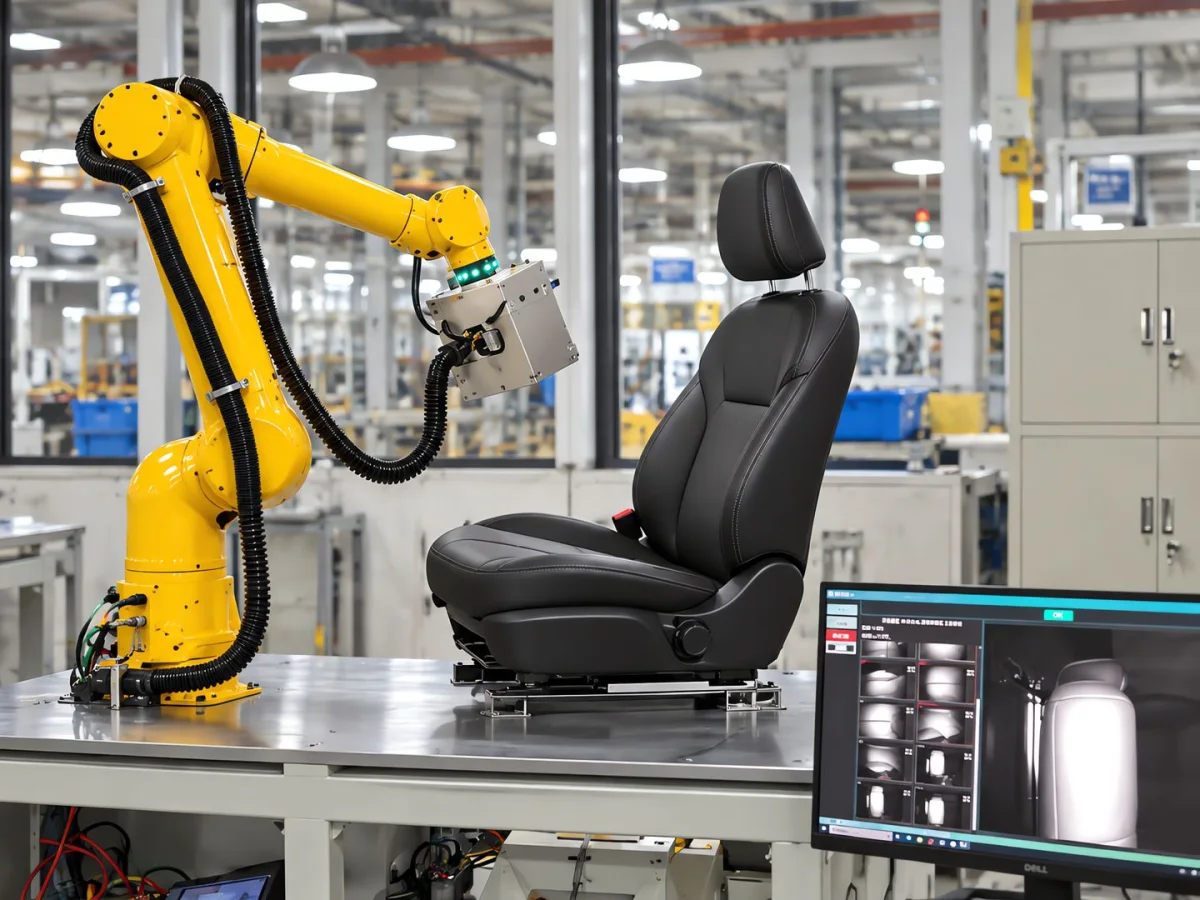
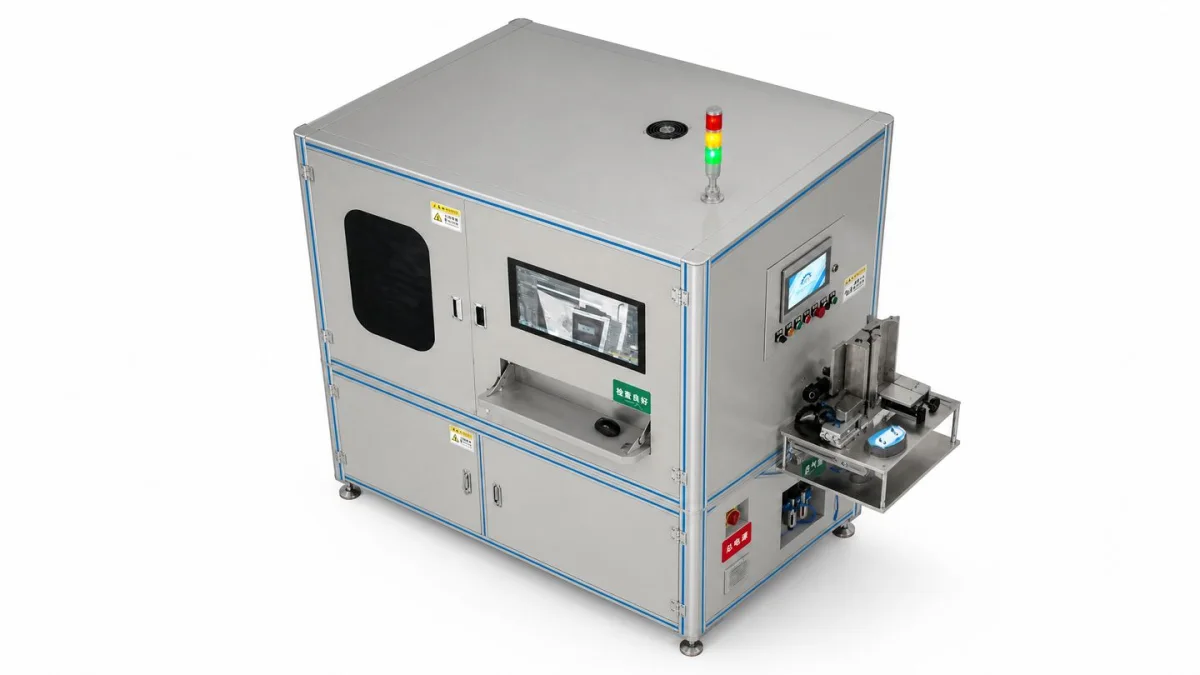
Leather AI visual inspection equipment images the leather surface with industrial cameras under stable lighting; the AI algorithm distinguishes natural grain from real defects such as scars, mange spots, insect holes, color difference, creases and holes, outputs OK/NG results and interlocks with the production line. It is suitable for both cut-piece and roll form.
Leather is a natural material: every hide differs in grain, pores and color, and naturally carries "normal irregularities" such as growth lines, blood veins and loose folds. This determines that leather inspection cannot simply use template matching — the boundary between normal texture and a genuine defect is inherently fuzzy.
The defects that really need to be caught include scars, mange spots, insect holes, gadfly holes, pinholes, color difference, creases, loose grain, cracking and holes. Their contrast against the natural texture is often low, especially on dark and suede leather, and a fixed threshold can hardly deliver a consistent judgement.
The same equipment can handle continuous roll inspection or cut-piece station inspection. Changing product types mainly means adjusting the illumination and algorithm recipe rather than changing the whole machine. Inspecting at the cut-piece stage removes defects before unloading and costs less than reworking at the finished-product stage.
Applicable Type
Natural Top-grain Leather
With pores and growth marks, the boundary between grain and defects is the most blurred, requiring AI segmentation
Split Leather / Corrected Grain Leather
Sanded and finished for a more uniform surface, but finishing defects and show-through must be checked
Suede / Nubuck
Napped surface, weak contrast between stains and fiber shedding, high demands on illumination
Finished Leather Roll Stock
Continuous material feed, suitable for full-width inspection with line scan cameras
Cut Piece Leather
Cut leather pieces are inspected piece by piece, with defect locations identified
Common defect
| Defect Types | Typical Manifestations | Inspection Focus Points |
|---|---|---|
| Scars / Fungal Spots | Local tissue anomalies, color spots | Low contrast against the natural texture; a segmentation model is required |
| Insect Holes / Warble Holes | Pinhole penetration or dimples | Transmitted or low-angle light forms a clearer image |
| Color difference / uneven finish | Inconsistent shade within the same sheet or batch | Requires a stable light source and color datum |
| Creases / Loose Grain | Surface collapse and looseness | Low-angle light highlights relief |
| Hole / Torn Hole | Through-penetration or short shot | Backlight Is the Most Direct |
| Crack / Crazing | Surface cracks, coating cracks | Watch for finish coat failure |
| Stain / Foreign Matter | Oil stains, adhesive dots and particles | Must be distinguished from fuzz |
| Surface Scratch | Linear Abrasion | Dark leather requires special illumination |
inspection Workflow
Complete chain from loading to judgment
- 01 Leather loading / roll unwinding or cut-piece feeding
- 02 Flattening and tension control to avoid wrinkle interference
- 03 Triggered imaging (area scan or line scan)
- 04 Locating datum and region segmentation
- 05 Texture modeling and defect segmentation
- 06 Defect classification and grading
- 07 Dimension / contour judgement (optional)
- 08 Composite OK / NG Result
- 09 Marking / rejection and image archiving
AI Inspection Principles
AI Visual Inspection Principles
The essence of leather inspection is "finding anomalies against a natural texture background". The algorithm first builds a statistical model of the normal texture, then judges local areas that deviate from that model as suspected defects, and finally a classification network distinguishes defect types from natural features. The difficulty lies not in the classifier but in imaging — the depth of field over the undulating hide and the reflections from suede surfaces must each be suppressed.
Illumination almost decides success or failure with leather. For full-grain leather, diffused light suppresses pore reflections and highlights scars; for suede, low-angle light gives a consistent nap direction; stains on dark leather and scratches on light leather need different lighting setups, and different colors and surface states usually require separate recipes.
For the judgement strategy, it is recommended to grade defects as "critical / major / acceptable" rather than making it binary. Natural leather can almost never be free of defects; what really needs to be controlled is whether the position, size and grade of defects fall within the customer's standard, and that standard needs to be confirmed with samples and acceptance specifications.
Applicable Industry
Applicable equipment
Common Question
Can leather inspection distinguish natural grain from real defects?
Can dark leather and light leather use the same lighting setup?
Can suede / nubuck be inspected?
Can defects inside leather be detected?
What is the inspection accuracy?
What samples are needed to develop a solution?
Can It Be Integrated Into an Existing Production Line?
Submit sample testing
Send OK and NG leather samples in different colors and surface conditions (top grain / split / suede), and we will run actual imaging and algorithm tests to give illumination plans and defect grading recommendations for each variety.
Submitted successfully
We have received your sample testing request. A solution engineer will contact you within 1 business day via contact you.
Need to assess imaging conditions, defect criteria and cycle time item by item? Go to the Full Requirement Assessment →
Send Us Your Material and We Will Show You the Measured Results
Provide several OK and NG samples of the material, and a solution engineer will run actual imaging and judgement tests on the equipment to give a workable inspection configuration recommendation, rather than reading the datasheet alone.