Clip Presence/Absence Inspection
Judges whether clips, retaining rings and fixing clamps are installed and fully engaged, covering common problems such as missing part, not engaged and poor engagement.
inspection Overview
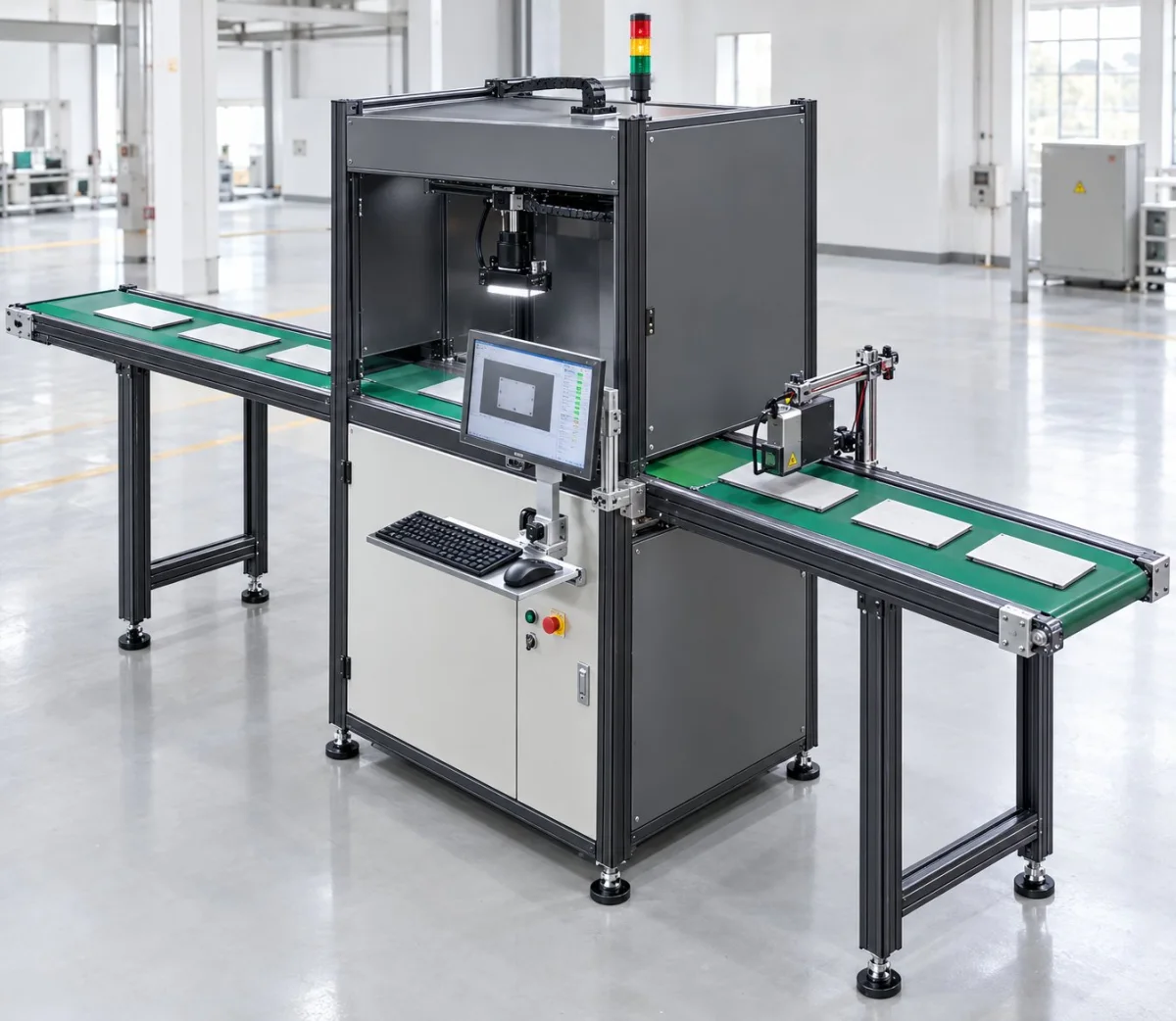
Clip presence/absence inspection: determines whether clips, retaining rings, and fixing clamps are installed and fully engaged, covering common problems such as missing parts, incomplete engagement, and poor engagement. Judgement usually does not assess details such as threads or dimensions, but rather Whether the visual feature at that position exists and matches expectations, output OK / NG and interlock with the production line.
Judges whether clips, retaining rings and fixing clamps are installed and fully engaged, covering common problems such as missing part, not engaged and poor engagement.
The feasibility of "clip presence/absence inspection" depends on Whether the visual features of the object are stable and distinguishable, as well as the on-site optical and tooling conditions. Each item is expanded below in the order commonly used in inspection engineering.
Object Characteristics
How the object appears in the image
- Varied structures, including plastic clips, metal retaining rings and spring clips
- Usually engages with a mating structure, so judging "fully seated" requires checking the engagement state
- An intermediate state may occur where the part is placed but not snapped shut
- Colors are often close to the assembly, especially for black plastic parts
inspection Challenges
Where Problems Really Occur on Site
- Contrast is low when plastic parts are close in color
- An unlatched part may differ from a latched one only by a very small gap
- Clip positions may be partially blocked by other parts
- Products with multiple clips require checking each one, and the positions are scattered
Vision Judgement method
How acceptance criteria are set and why
Presence/absence judgement checks Whether the clip body is present; the seating judgement depends on The engagement between the clip and the mating structure, and the common acceptance criteria are the gap width at the latch or the relative position of the latch hooks.
Because the differences are subtle, these acceptance criteria usually demand high imaging resolution and consistent illumination, and we recommend validating them on the actual tooling.
Applicable algorithm
Choose by the Form of the Acceptance Criteria, Not by Complexity
Region presence
Determine whether the clip body is present
Geometric Measurement
Measure the snap-fit gap / claw position to judge whether it is fully seated
Optical Precautions
Imaging conditions set the upper limit of feasibility
- Grazing light casts shadows in the latch gap, highlighting whether a gap exists
- For black plastic parts, diffuse light plus high-resolution imaging is recommended to avoid specular highlights
- If the clips are spread across multiple faces, evaluate whether to add views
OK / NG Output
How results are judged and passed to the production line
| Inspection Status | judgement | Interlocking Action |
|---|---|---|
| Clip in place and fully engaged | OK | release |
| Missing Clip | NG | Block as missing part |
| Clip in place but not engaged | NG | Block as an assembly defect |
Applicable Industry
This type of inspection is common in the following industries
Common Question
The most common questions about this object
The plastic clip and the plastic housing are the same color - how can they be inspected?
It relies on shape and shadow rather than color. Grazing light that casts shadows at clip edges or mating seams is the usual approach in such cases. Light of different wavelengths can also be tried to enhance surface differences.
"Placed but not engaged" — can this be detected?
Yes, but this is a more difficult class of acceptance criteria because the difference is usually very small. Sufficient imaging resolution and stable illumination are required, and it is recommended to provide this type of sample for validation rather than judging feasibility from specifications alone.
What are the acceptance criteria for this object?
Presence/absence judgement checks whether the clip body exists; seating judgement looks at how the clip engages with the mating structure, and the usual acceptance criteria are the gap width at the engagement point or the relative position of the claws.
What are the illumination requirements for this type of object?
Grazing light can cast a shadow in the snap-fit gap to highlight "whether there is a gap". For black plastic parts, diffuse light + high-resolution imaging is recommended to avoid highlight interference.
What Are the Inspection Accuracy and Minimum Detectable Size?
It depends on the combination of field of view and camera resolution, and is affected by the lens, illumination and algorithm. To be added — the configuration must be derived from your minimum defect size, subject to the results of a measured sample trial.
How Do We Verify That Our Product Can Be Detected?
Please provide a correctly assembled part, a part with a missing clip and a part that is not fully snapped in; our engineers will evaluate whether the three states can be distinguished in images.
Submit sample testing
Please provide a correctly assembled part, a part with a missing clip and a part that is not fully snapped in; our engineers will evaluate whether the three states can be distinguished in images.
Submitted successfully
We have received your sample testing request. A solution engineer will contact you within 1 business day via contact you.
Need to assess imaging conditions, defect criteria and cycle time item by item? Go to the Full Requirement Assessment →
Send Us Your Workpiece and We Will Show You the Measured Results
Provide several OK and NG samples, and the solution engineer will run actual imaging and judgement tests on the equipment, then give inspection configuration recommendations that can be implemented, rather than just reading a specification table.