Machining Automation for Automotive Parts and New Energy Parts
For automotive parts and new energy component manufacturers, we provide production-line-level automation covering incoming material storage, visual positioning, robot loading, machining centers, inline inspection, OK/NG sorting and MES quality traceability, supporting mixed-model production on one line.
Solution Overview
For automotive parts and new energy parts manufacturers, provides production-line-level machining automation solutions
Automation for automotive parts and new energy component machining is a production-line-level solution covering 8 steps: "incoming material storage — vision positioning — robot loading — machining center processing — process step transfer — in-line inspection — OK/NG sorting — MES quality traceability". Vision positioning and flexible fixtures enable multiple product types to share one line, and preset programs and fixtures are recalled at changeover; inspection data is bound to the process step and equipment and returned to MES, so every product can be traced back to the corresponding process step and equipment. Two line configurations are offered, truss multi-machine linked lines and robot single-machine cells.
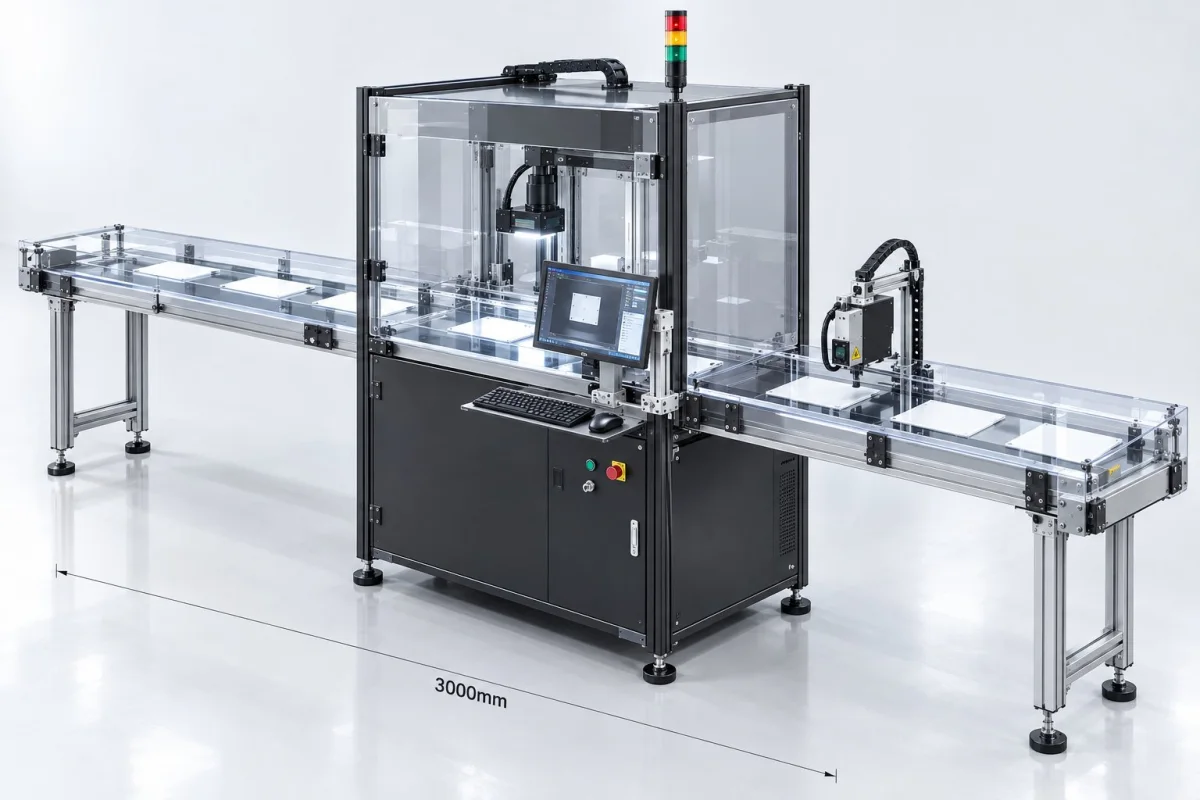
For manufacturers of automotive parts such as engine housings, gearbox housings, and chassis parts, and new energy parts such as battery trays, motor housings, and electronic control housings, we provide production-line-level machining automation solutions.
The complete process is: Incoming material storage → vision positioning → robot loading → machining center → process transfer → in-line inspection → OK/NG sorting → MES quality traceability; supports multi-variety production on one line, with the line format configured according to part specification and cycle time.
Solution configuration
Four Modules Combined by Workpiece and Cycle Time, Available as Options
Feeding and Loading
- Incoming material storage and automatic feeding
- Vision positioning guides part picking
- Industrial robot loading
- Suits multiple part specifications
Machining and Transfer
- Automatic loading and unloading for machining centers
- Automatic transfer between process steps
- Can Be Configured as a Multi-Machine Line
- Air-blow cleaning and pose correction
In-Line Inspection
- Inline inspection after machining
- Dimension and appearance inspection
- Automatic OK/NG Judgement
- Defective part isolation and diversion
data traceability
- Inspection Data Sent Back to MES
- Process step bound to equipment
- Quality records traceable
- Automatic Report Generation
process Workflow
Full Process Coverage from Incoming Material Storage to MES Traceability
- 01 Incoming Material Storage
- 02 Vision Positioning
- 03 Robot Loading
- 04 Machining Center Processing
- 05 Process Step Transfer
- 06 In-Line Inspection
- 07 OK/NG Sorting
- 08 MES Quality Traceability
Critical Stages
Multi-product shared lines and quality traceability determine the flexibility and consistency of the production line
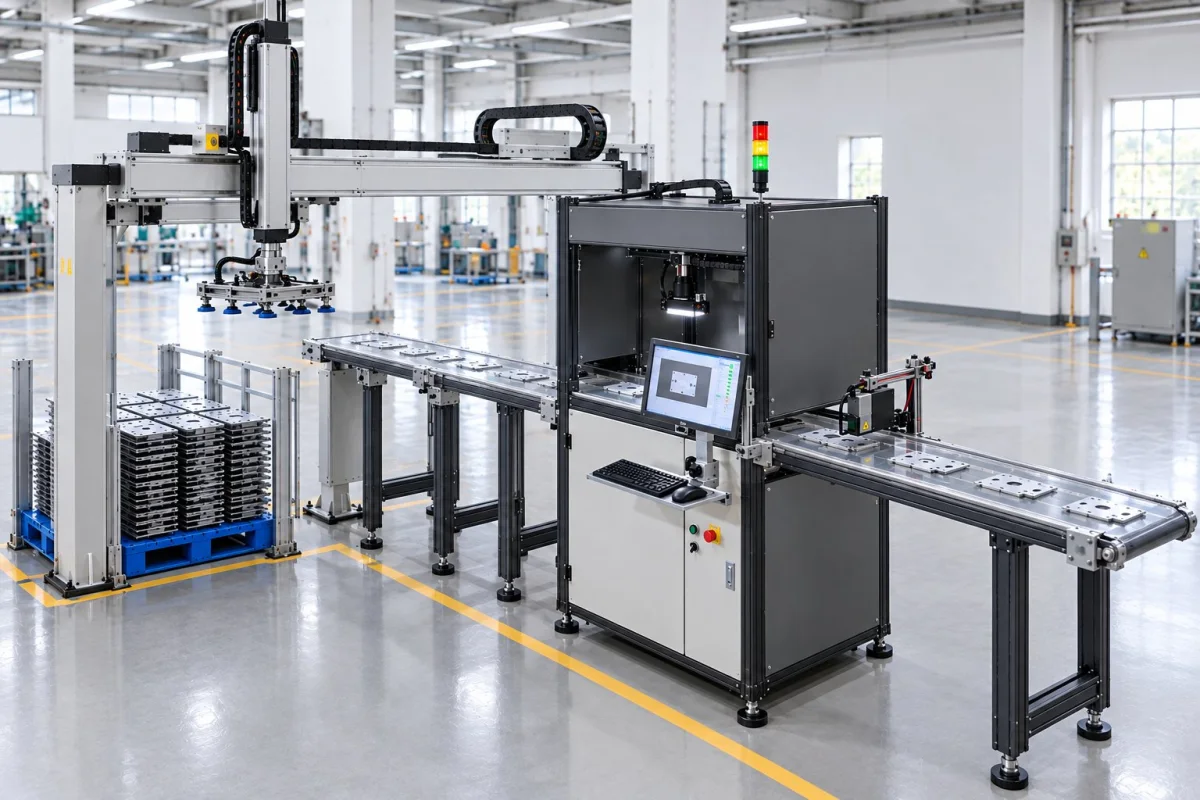
Multi-Variety Mixed-Model Flexible Production Line
With vision positioning and flexible fixtures, one production line can handle multiple parts; when changing models, only the corresponding program and fixture need to be called up, reducing changeover downtime.
- Vision positioning confirms part position and model
- Flexible fixtures accommodate multiple part specifications
- Changeover recalls preset programs to shorten commissioning time
- Can integrate with WMS to manage incoming material and inventory
Inline Inspection and Quality Traceability
After machining is complete, parts enter the inspection station automatically and the inspection results are reported back to MES in real time, so every product can be traced to its corresponding process step and equipment.
- Automatic part retrieval into the inspection station after machining
- Dimension and appearance inspection with automatic OK/NG sorting
- Inspection data bound to the process step and equipment and sent back to MES
- Quality reports are generated automatically, with traceability queries supported
Applicable workpiece
Handles high-mix, large-volume and small-to-medium production
- Aluminum alloy extruded/welded tray
- Multi-face milling and drilling
- Dimension and flatness inspection
- High-volume production line format
- Die-cast / extruded housing
- Multi-process machining center
- Coolant channel hole and mounting hole inspection
- Medium-volume production line format
- Cast Housings
- Multi-face machining and boring
- Sealing and dimensional inspection
- High-volume production line format
- Cast caliper body
- Multi-step machining
- Thread and mating surface inspection
- Medium-volume production line format
Delivery and After-sales
Follow-through from requirement confirmation to trial production acceptance
- 01 Requirement confirmation and site survey
- 02 Solution design and simulation
- 03 Equipment manufacturing and procurement
- 04 Integration, installation and commissioning
- 05 Trial production and process optimization
- 06 Acceptance and Delivery
- 07 After-sales service and follow-up visits
Remote technical support and regular follow-up visits are provided after delivery; repairs for non-human-caused damage are free of charge within the warranty period, and paid maintenance and upgrade services are provided after the warranty expires.
Common Question
Common questions about automation for automotive and new energy component machining
Which Parts Is It Suitable For?
The solution lists 4 typical part categories: Battery Trays (new energy battery pack structural parts), Motor Housings (drive motor housing), Gearbox Housing (transmission housing), Brake Calipers (brake system critical parts).
How is multi-variety production on a shared line achieved?
Vision positioning confirms the part position and model, and flexible fixtures adapt to multiple part specifications; when changing models, preset programs and fixtures are called up to reduce changeover downtime. The solution can integrate with WMS for incoming material and inventory management.
What granularity of traceability can be achieved?
Inspection Data Binding Process step and equipment and then reported back to MES; the solution states that every product can be traced to its corresponding process step and equipment, with quality reports generated automatically and traceability queries supported.
How Many Line Configurations Are There and How Do I Choose?
Two options: Gantry Multi-Machine Line and Standalone robot cell, selected according to the workpiece and cycle time. In the solution, modules are combined along 4 configuration dimensions: feeding and loading, machining and transfer, in-line inspection, and data traceability, which can be selected as needed.
What Does Inline Inspection Include?
After machining, parts are picked automatically into the inspection station for dimensional and appearance inspection, with automatic OK/NG judgement and isolation and diversion of defective parts. The machining and transfer steps also include air-blow cleaning and pose correction.
Submit Samples and Requirements
Send us the workpiece drawing, machining equipment, current cycle time and site conditions, and our solution engineers will recommend the material bin type, picking method and inspection configuration.
Submitted successfully
We have received your sample testing request. A solution engineer will contact you within 1 business day via contact you.
Need to assess imaging conditions, defect criteria and cycle time item by item? Go to the Full Requirement Assessment →
Configured to Your Workpieces and Cycle Time
Send us the workpiece drawing, machine tool equipment and production cycle time, and our solution engineers will recommend the corresponding material bin type, picking method and inspection configuration.