Custom Automation and Existing Production Line Retrofit
For automation upgrades and non-standard customization of existing production lines, from site survey, bottleneck analysis and solution design to non-standard manufacturing, installation and commissioning and trial production acceptance, covering automation retrofit of loading and unloading, inspection, handling, packaging and other stations.
Solution Overview
Automation upgrades and custom design for existing production lines
Custom automation and existing line retrofit address automation upgrades and custom builds for existing production lines, covering 8 steps: "site survey — bottleneck analysis — solution design — custom manufacturing — installation and commissioning — trial production — acceptance — delivery". Retrofit scenarios cover four categories of station: loading and unloading, inspection, handling and packaging; assessment is carried out along three dimensions — current state, bottlenecks and return on investment — including bottleneck station identification, automation feasibility assessment and return-on-investment calculation. Integration takes two forms, adding new custom equipment or integrating with existing equipment, with the principle of minimizing line stoppage during the retrofit.
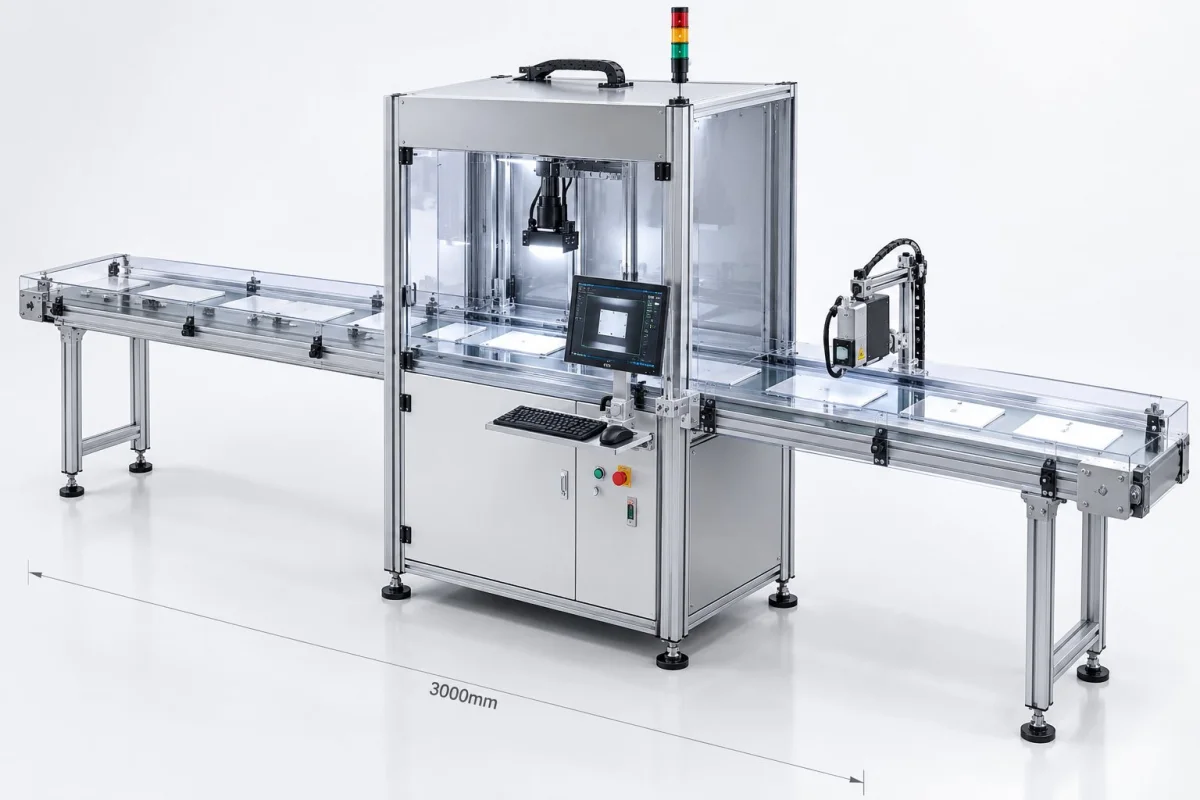
For companies whose existing production lines need an automation upgrade or that need custom automation equipment, we provide a one-stop retrofit solution from assessment to delivery.
The complete process is: Site survey → Bottleneck analysis → Solution design → Custom manufacturing → Installation and commissioning → Trial production → Acceptance → Delivery; covering automation retrofit for loading and unloading, inspection, handling, packaging and other stations.
Solution configuration
Four Modules Combined by Workpiece and Cycle Time, Available as Options
Current-State Assessment
- Site survey and production line analysis
- Bottleneck Station Identification
- Automation feasibility assessment
- ROI Calculation
solution design
- Custom non-standard solution design
- 3D Modeling and Simulation
- Integration plan for existing equipment
- Cycle time and throughput calculation
Non-Standard Manufacturing
- Non-standard equipment manufacturing and procurement
- Fixture and line customization
- Electrical and pneumatic configuration
- Factory Pre-commissioning
Integration and Commissioning
- On-site installation and integration
- Integration with Existing Equipment
- Linked-line commissioning and trial production
- Process optimization and acceptance
process Workflow
End-to-end follow-up, from site survey to delivery
- 01 Site Survey
- 02 Bottleneck Analysis
- 03 solution design
- 04 Non-Standard Manufacturing
- 05 Installation and Commissioning
- 06 Trial Production
- 07 acceptance
- 08 delivery
Critical Stages
Manual station retrofit and equipment integration are the two main directions of retrofitting
Automation Retrofit of Manual Stations
Retrofits labor-dependent loading and unloading, inspection and handling stations on the production line to automation, reducing labor costs and quality variation.
- Identify stations dependent on manual work
- Design an automation replacement solution
- Custom non-standard equipment and deployment
- Seamless integration with existing production lines
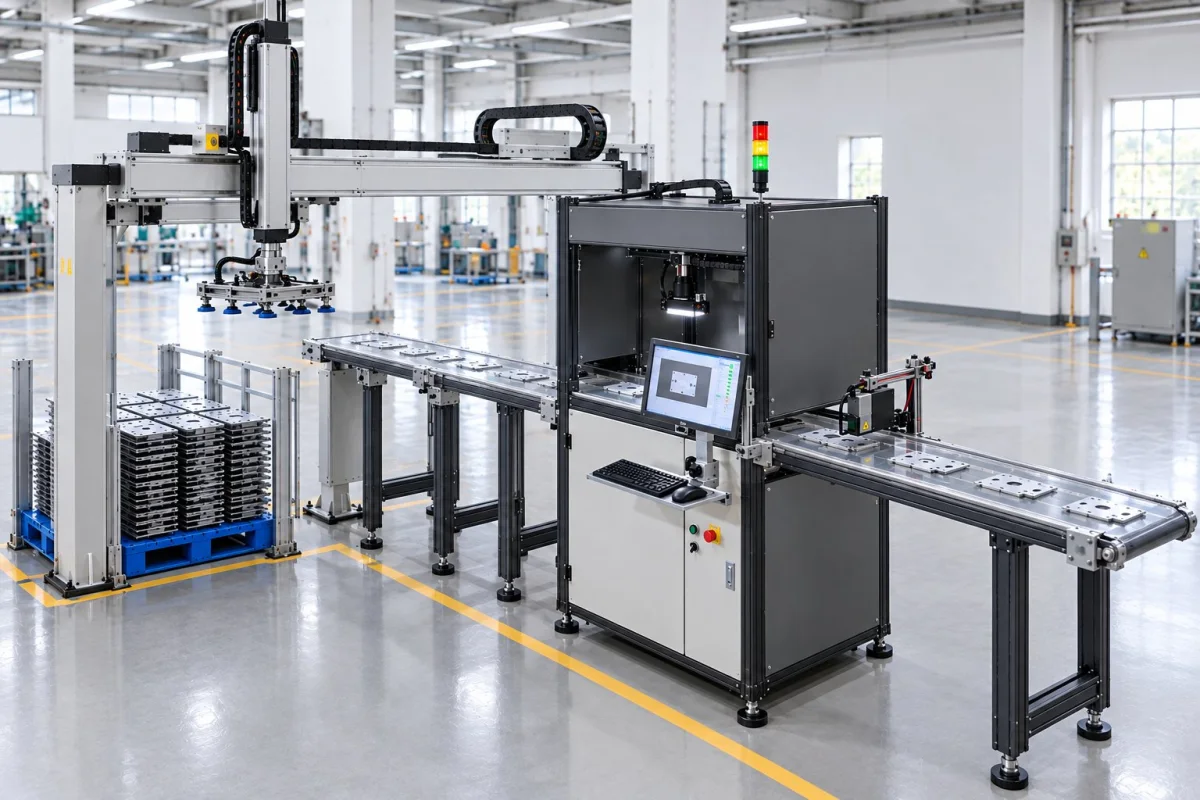
Integration with Existing Equipment
Integrate the newly added custom equipment with existing machine tools, production lines and inspection equipment to achieve data interchange and process step interlocking.
- Integration of new equipment with existing machine tools
- Production line process step interlocking control
- Data exchange and MES integration
- Minimize line downtime in retrofit
Applicable Scenarios
Covers automation retrofits for every kind of station
- Robots / gantries replace manual loading and unloading
- Material bin feeding and automatic loading
- Integration with Existing Machine Tools
- Reduces manual labor and missing-part risk
- Automatic inspection replaces manual inspection
- Vision / dimension / appearance inspection
- Automatic OK/NG Sorting
- Data Feedback to MES
- Conveyor line / gantry / AGV replaces manual handling
- Automatic transfer between process steps
- Reduced Labor Intensity
- Improved Transfer Efficiency
- Automatic packaging and palletizing
- Robot picking and case packing
- Integration with the End of the Production Line
- Lower Labor Costs
Delivery and After-sales
Follow-through from requirement confirmation to trial production acceptance
- 01 Requirement confirmation and site survey
- 02 Solution design and simulation
- 03 Equipment manufacturing and procurement
- 04 Integration, installation and commissioning
- 05 Trial production and process optimization
- 06 Acceptance and Delivery
- 07 After-sales service and follow-up visits
Remote technical support and regular follow-up visits are provided after delivery; repairs for non-human-caused damage are free of charge within the warranty period, and paid maintenance and upgrade services are provided after the warranty expires.
Common Question
Common questions about custom automation and production line retrofit
Which step does the retrofit start from?
From Site Survey To start, the flow is: site survey → bottleneck analysis → solution design → custom manufacturing → installation and commissioning → trial production → acceptance → delivery, 8 steps in total.
How do you assess whether to retrofit?
Based on 3 evaluation dimensions: Current state, bottleneck, ROI. The current-state assessment includes site survey and production line analysis, bottleneck station identification, automation feasibility assessment and return on investment calculation.
Which stations are mainly retrofitted?
4 retrofit scenarios: Loading and unloading, inspection, handling, packaging stations. The solution first identifies the stations that depend on manual labour, then designs automation alternatives, integrating with the existing production line through custom automation equipment development and deployment.
Will a Retrofit Stop the Line for a Long Time?
This solution adopts Minimize line downtime in retrofit as the principle: integration of new equipment with existing machine tools, interlocked control of production line process steps, data exchange and MES integration. The actual line stoppage schedule must be confirmed together with the site conditions and the project plan.
How many integration methods are there?
2 types: New Custom Equipment and Integration with Existing Equipment. The solution design stage includes custom design of the non-standard solution, 3D modeling and simulation, an integration plan for existing equipment, and cycle time and throughput calculation.
Submit Samples and Requirements
Send us the workpiece drawing, machining equipment, current cycle time and site conditions, and our solution engineers will recommend the material bin type, picking method and inspection configuration.
Submitted successfully
We have received your sample testing request. A solution engineer will contact you within 1 business day via contact you.
Need to assess imaging conditions, defect criteria and cycle time item by item? Go to the Full Requirement Assessment →
Configured to Your Workpieces and Cycle Time
Send us the workpiece drawing, machine tool equipment and production cycle time, and our solution engineers will recommend the corresponding material bin type, picking method and inspection configuration.