Food
For food packaging, providing visual inspection solutions for inkjet code presence and content verification, seal integrity, and packaging appearance and count verification.
Industry Production characteristics
How This Industry Produces Determines How Inspection Should Be Done
The visual inspection of food revolves around two things: first, making the most common defects in this industry image clearly and consistently; second, connecting the judgement result reliably into the production line. Common implementation constraints in this industry are "production line speed is high, so exposure time is extremely short"; "reflective packaging materials (such as laminated film or aluminized film) interfere with imaging". Whether detection can be stable depends on material optical properties, minimum defect size, and cycle time, and is subject to the results of a measured sample trial.
The food industry is characterized by High-speed continuous production, strict hygiene requirements, strict regulatory traceability. Inkjet codes for production date, batch number and shelf life are mandatory; a missing or wrong code is a direct compliance risk.
Visual inspection in this industry mainly handles Post-packaging compliance verification: whether the inkjet code is clear and readable, whether the seal is complete, whether the packaging is damaged, and whether the contents match the labeling.
Industry Inspection issues
Where problems actually occur on site
- Missing, blurred or misaligned inkjet codes
- Production date / batch number does not match the work order
- Incomplete sealing, trapped material
- Packaging damage or leakage
- Count does not match the carton specification
Typical Inspection Objects
The Most Common Inspection Objects in This Industry
Typical Inspection Task
The judgments to be made on these objects
- Inkjet code presence/absence and content verification
- Seal state inspection
- Packaging integrity check
- Carton count verification
- Label and packaging marking verification
Vision Inspection Challenges
Implementation constraints specific to this industry
- Production line speed is high, exposure time extremely short
- Reflective packaging materials such as laminated film and metallized film interfere with imaging
- Distortion in inkjet codes on curved surfaces
- Clean and washdown environments demand high equipment protection
Choosing the right algorithm
Choose by Acceptance Criteria Form, Not by How Advanced It Is
OCR / Code Reading
Inkjet code content recognition and verification
Region presence
Seal and label presence judgement
Anomaly Detection
Packaging appearance anomaly recognition
acquisition and light source
Optical conditions set the upper limit of feasibility
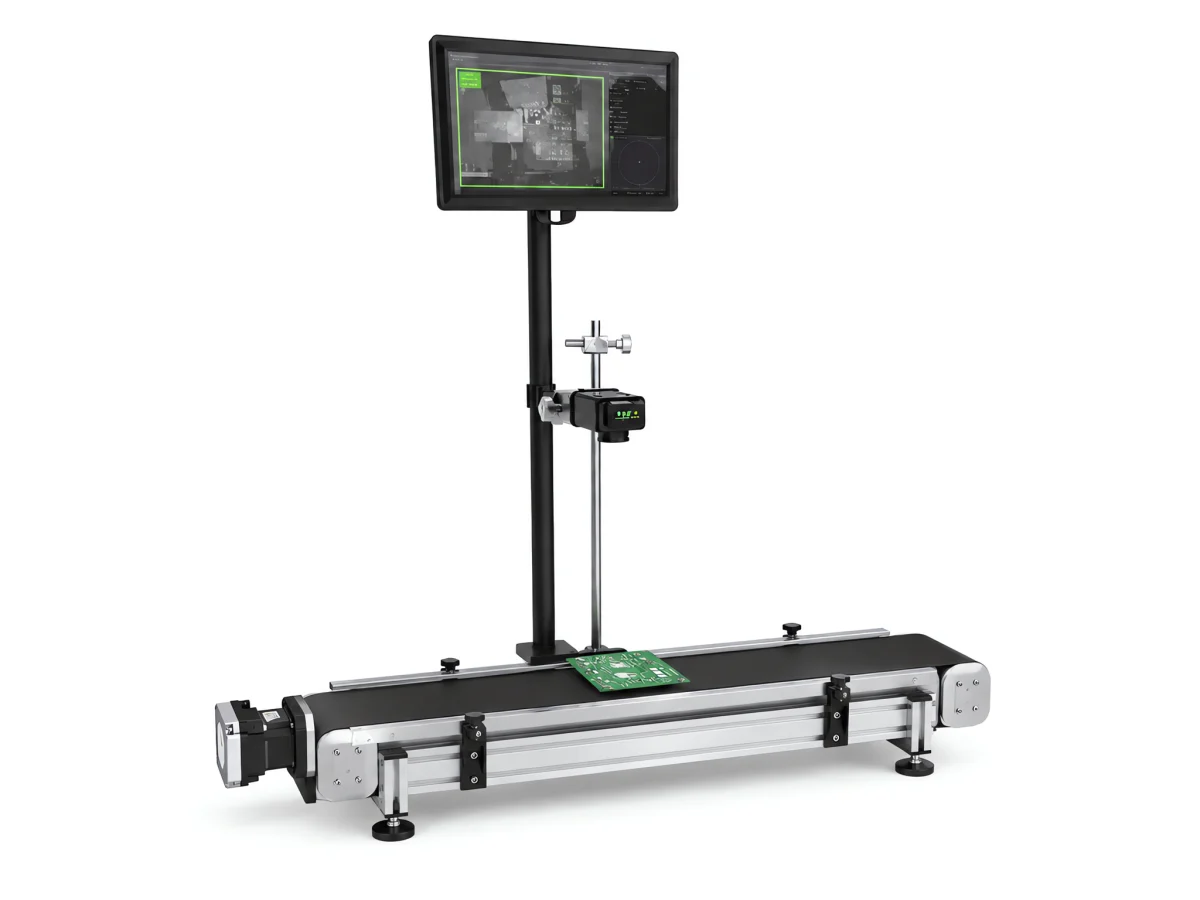
- A high-frequency strobe light source with short exposure is a standard setup on high-speed packaging lines
- For reflections from aluminized / laminated film, use diffuse light and avoid the specular reflection angle
- Equipment must account for water and dust protection ratings to suit wash-down environments
OK / NG Judgement
How results are judged and used
| Inspection Status | judgement | Interlocking Action |
|---|---|---|
| Inkjet code, sealing and packaging all qualified | OK | release |
| Missing inkjet code / content mismatch | NG | Reject and alarm |
| Sealing or packaging defect | NG | Reject to keep it out of the market |
PLC and Automation Interlocking
How results connect to the production line
We recommend comparing inkjet code recognition results with work order information in real time and raising an alarm immediately on a mismatch - such problems usually point to the inkjet equipment rather than an individual product.
The rejection action must be precisely synchronized with high-speed conveying; the accuracy of the trigger timing directly determines the rejection success rate.
Applicable equipment
Common configuration forms for this type of inspection
Related Solutions
View the corresponding solution by inspection task
Common Question
The Questions Most Often Asked in This Industry
The production line is fast, can inkjet codes be inspected?
Yes; a strobe light source and short exposure are usually used to "freeze" the moving inkjet code. The usable line speed depends on the exposure time, light source brightness and code contrast, and must be determined by measurement at the site.
How is reflective packaging film handled?
The key is to adjust the lighting and shooting angle so that specular reflection does not enter the lens; use a polarizer where necessary. Such problems must be tested on the actual packaging material, not decided from experience alone.
For visual inspection in this industry, what needs to be solved first?
The implementation constraints commonly seen in this industry center on: "line speeds are high and exposure time is extremely short"; "reflective packaging materials (such as laminated film or metallized film) interfere with imaging"; "codes printed on curved surfaces are distorted". These constraints affect both the imaging solution and the cycle-time design. Normally a sample trial is needed to validate before the configuration is finalized.
How does the inspection result interlock with the production line?
We recommend comparing the inkjet code recognition result with the work order information in real time and raising an alarm immediately on any mismatch—this type of problem usually points to the inkjet equipment rather than an individual product. The rejection action must be precisely synchronized with high-speed conveyance; the accuracy of the trigger timing directly determines the rejection success rate.
What Equipment Configuration Does This Type of Inspection Generally Require?
Common forms include: "high-speed inline inspection device (with strobe light source)," "post-packaging inkjet code verification station," "multi-view packaging appearance inspection cell." The specific machine model and quantity depend on the inspection area, minimum defect size and line cycle time, and must be confirmed against site conditions.
Which process steps in this industry benefit most from a visual inspection station?
The most common are: "inkjet code presence and content verification"; "seal condition inspection"; and "packaging integrity inspection". Which process steps to actually instrument depends on the cost of defects escaping downstream and of rework — the later a defect is found, the higher the cost.
How do we judge whether our product is suitable for visual inspection?
Please provide actual packaging samples (including good parts and parts with inkjet code defects or seal defects), and state the production line speed and the packaging material. In general, as long as the acceptance criteria can be stated clearly, the defects can image clearly and consistently, and the cycle time matches the field of view, the project's feasibility is confirmed.
What inspection accuracy can be achieved?
Accuracy is not a fixed value that holds regardless of conditions. To be added — the minimum detectable size depends on the combination of field of view and camera resolution, and is also affected by illumination, lens and algorithm; the configuration must be derived from your minimum defect size and validated by measurement.
Submit sample testing
Please provide actual packaging samples (including good parts and parts with poor inkjet coding or poor sealing), and state the line speed and packaging material.
Submitted successfully
We have received your sample testing request. A solution engineer will contact you within 1 business day via contact you.
Need to assess imaging conditions, defect criteria and cycle time item by item? Go to the Full Requirement Assessment →
Inspection Configuration Based on Your Industry's Products and Cycle Time
Send us photos of the workpiece, the inspection requirement (what to inspect, and the tolerance for escapes and false calls), and the line cycle time, and our solution engineers will recommend the inspection method, optical solution, and interlocking configuration for that industry.