Neoprene AI Visual Inspection Equipment
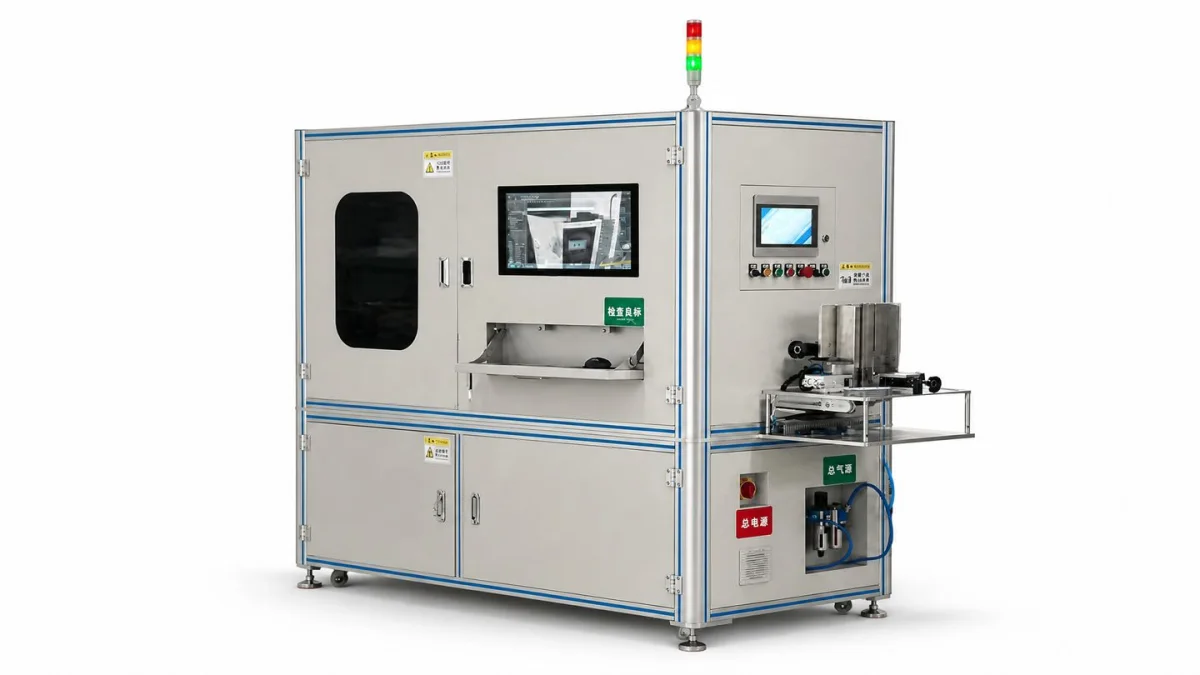
Neoprene (diving material) AI visual inspection equipment targets foamed rubber sheet, performing inline inspection of bubbles, dents, pinholes, indentations, cracks, color differences, poor lamination and other defects, with OK/NG output and production line interlocking.
Materials Overview
Foamed matte surfaces make bubble pits easily confused with texture
Neoprene (wetsuit material) AI visual inspection equipment images foamed rubber sheet; the algorithm identifies defects such as bubbles, pits, pinholes, indentations, cracks, color difference and poor bonding, outputs OK/NG results and interlocks with the production line.
Neoprene (commonly called wetsuit material) is a foamed rubber sheet with a matte surface and a fine foam texture, commonly used in diving, water sports, protective gear and sports goods. Its difficulty lies in the "foam texture" — the surface already has uniform small cells, and real defects (air bubbles, pits, pinholes) closely resemble normal cell morphology, making them easy to confuse.
Neoprene-specific defects include bubbles (abnormal bulging of closed cells), pits, pinholes, indentations (crushing), cracks, color difference and poor bonding (in multi-layer lamination). Bubbles and pits are a matter of degree and need to be graded.
For inspection, AI builds a model of the normal foam texture and judges abnormal bulges, dents and breaks as defects; indentations and cracks are formed into a clear image with low-angle light. Changing color and thickness mainly means adjusting the illumination and the recipe.
Applicable Type
Smooth Neoprene
Surface calendering, key points: scratches and pinholes
Embossed Neoprene
Textured; the focus is on texture consistency
Laminated Neoprene
Multilayer lamination, the focus is on poor bonding
Neoprene Cut Pieces
Already cut, inspected piece by piece with defect locating
Neoprene Roll Stock
Continuous material feed, line-scan full-width inspection
Common defect
| Defect Types | Typical Manifestations | Inspection Focus Points |
|---|---|---|
| Bubbles | Abnormal closed-cell bulging | Distinguished from normal foam cells |
| Pits | Localized surface dent | Low-angle light forms a clear image |
| Pinholes | Micro Penetration Holes | Transmitted or low-angle light |
| Indentation / Crack | Crushing or Cracking | Low-angle light highlights it |
| color difference | Inconsistent shade within the same batch | Stable Color Reference |
| Lamination Defect | Interlayer Separation | Focus on the Edges |
| Stain / Foreign Matter | Oil Stains, Particles | Distinguish From Foam Cells |
| Missing Corner / Deformation | Abnormal Shape | Requires Positioned Measurement |
inspection Workflow
Complete chain from loading to judgment
- 01 Neoprene loading / roll unwinding or cut-piece feeding
- 02 Flattening and tension control
- 03 Triggered Imaging
- 04 Foaming texture modeling
- 05 Anomaly region segmentation
- 06 Defect classification and grading
- 07 Dimension / contour judgement (optional)
- 08 Synthesized OK / NG
- 09 Marking / rejection and image archiving
AI Inspection Principles
AI Visual Inspection Principles
The core of neoprene inspection is "finding anomalies within the foamed texture". The algorithm builds a model of the normal cell texture and judges deviations such as blisters, pits and pinholes as defects; indentations and cracks are made to form a clear image with low-angle light. The difficulty is that normal cells are similar in form to defects, so over-rejection must be kept low through sample training.
For illumination, diffuse light provides even lighting and makes color difference and stains visible; low-angle light exposes indentation, pits, and cracks. Stains on dark neoprene and pits on light neoprene require separate illumination settings, with recipes grouped by color.
For judgement, we recommend grading bubbles and pits by severity and setting lamination defects as high priority. Specific thresholds must be confirmed by measured testing of OK / NG samples.
Applicable Industry
Applicable equipment
Common Question
Will the foamed texture of neoprene be confused with defects?
Can interlayer problems in laminated neoprene be detected?
Can Indentations and Cracks Be Seen Clearly?
Do different colored neoprenes need separate recipes?
What is the inspection accuracy?
What samples are needed to develop a solution?
Can It Be Integrated Into an Existing Production Line?
Submit sample testing
Send us OK and NG neoprene samples in different colors and surface conditions, and we will carry out foaming texture modeling and measured defect testing, then give illumination solution and grading recommendations.
Submitted successfully
We have received your sample testing request. A solution engineer will contact you within 1 business day via contact you.
Need to assess imaging conditions, defect criteria and cycle time item by item? Go to the Full Requirement Assessment →
Send Us Your Material and We Will Show You the Measured Results
Provide several OK and NG samples of the material, and a solution engineer will run actual imaging and judgement tests on the equipment to give a workable inspection configuration recommendation, rather than reading the datasheet alone.