Garment Cut-Piece AI Visual Inspection Equipment
Garment cut-piece AI visual inspection equipment: for garment cut pieces such as suits, shirts, uniforms, workwear, knitwear, woven and denim, it performs inline inspection of stains, color differences, damage, holes, yarn breakage, weaving defects and other defects, outputs OK/NG and interlocks with the production line, replacing manual visual inspection and improving full-inspection consistency.
Products Overview
Configured separately by series such as formal wear, fashion, denim, down, underwear, and swimwear
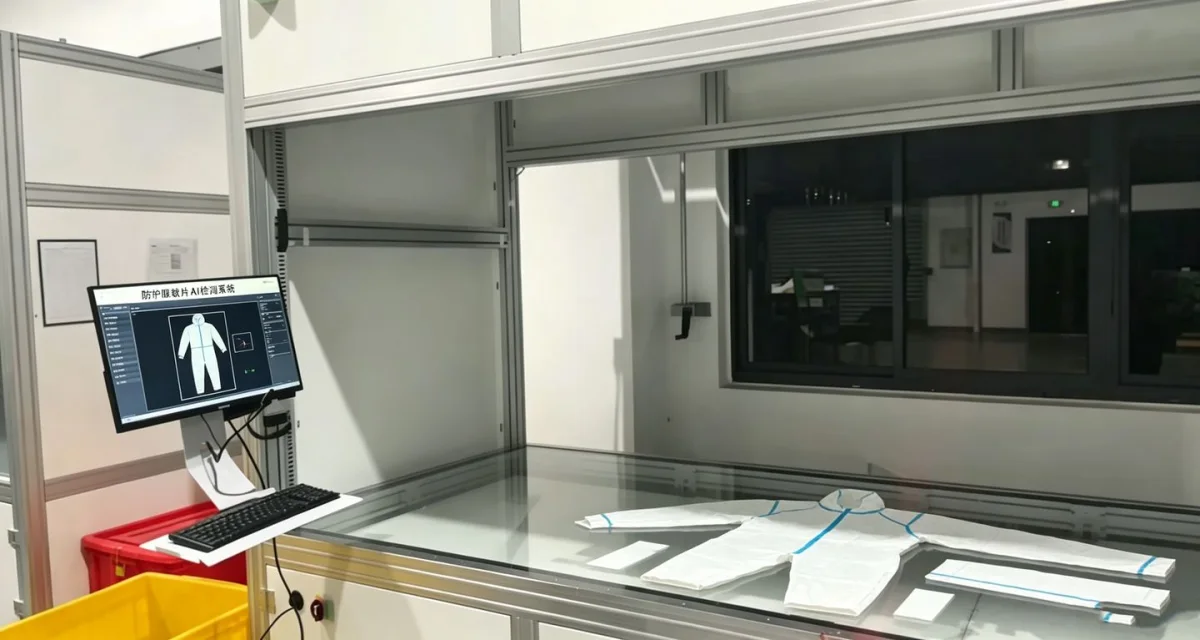
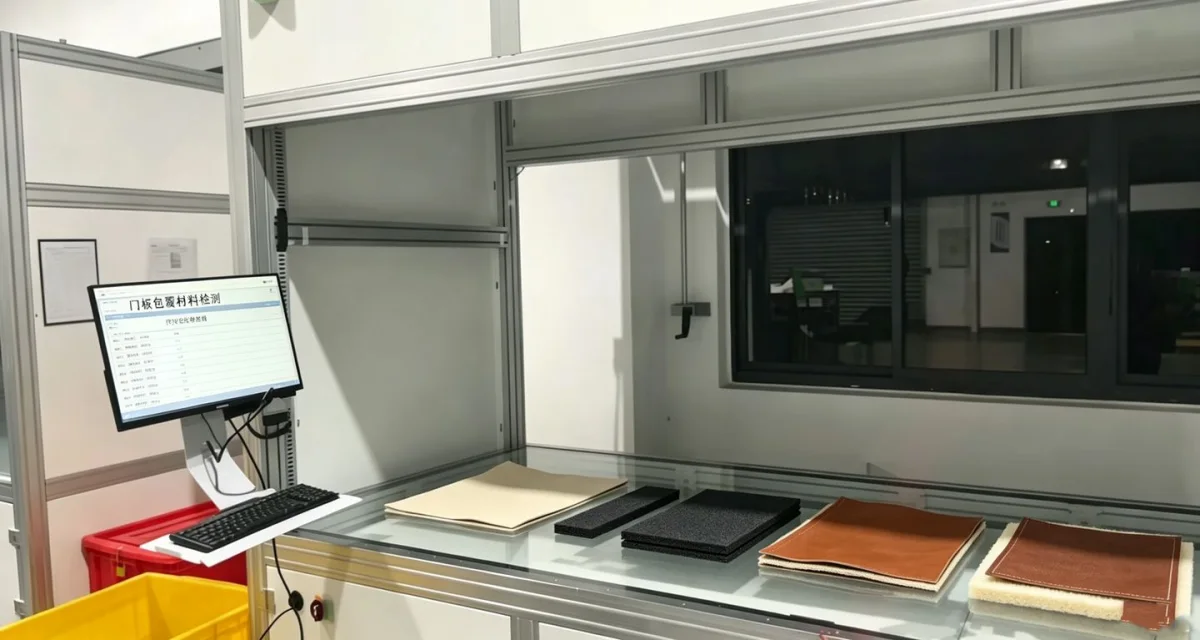
Garment cut-piece AI visual inspection equipment is used for 100% inspection of garment fabric at the cut-piece stage. Industrial cameras and custom light sources form the image, and AI algorithms identify defects such as stains, color differences, damage, holes, yarn breakage, and weaving defects and output OK/NG. It is suitable for in-line appearance inspection of garment cut pieces such as suits, shirts, uniforms, workwear, knitted, woven, and denim.
A considerable share of quality problems in the garment industry are already determined at the "cut piece" stage — if the fabric itself has defects, the cut piece will be a problem piece; damage, missing corners, and cutting deviations created during cutting can equally only be scrapped or downgraded. The earlier they are found, the smaller the loss.
The characteristics of garment cut pieces are Many pieces, large area, wide variation in color and grain. On dark fabrics stains are hard to see, on light fabrics scratches are hard to see, and jacquard and check patterns also disturb the algorithm. Covering so many varieties with a single machine relies on switchable light source configurations and algorithm recipes.
Planning inspection configurations by series is more practical: for formalwear series, stripe and check matching and stains are the main focus; for denim series, weft skew, holes, and color difference; and for down and hardshell jacket series, delamination and foreign matter in laminated fabric must also be covered.
- Series covered: formal wear / fashion / denim / down jackets / outdoor jackets / underwear / swimwear / specialty apparel
- Inspection focus: defects in the fabric itself + damage from the cutting process
- Key difficulty: dark and light colors require different illumination strategies
- Changeover method: switch recipes by fabric series
Core Functions
What the Equipment Can Do and How Far It Can Go
Planning by Garment Series
Formal wear, denim, down jackets, underwear and other series differ greatly in fabric characteristics, so inspection solutions are configured separately by series.
Light and Dark Color Compatibility
Switchable illumination schemes handle both stains on dark fabric and scratches on light fabric.
Stripe and Check Matching Assistance
For checked and striped fabrics, an alignment check can be added to reduce cutting misalignment.
Fabric Defect Recognition
Fine defects such as yarn breakage, fuzz, and weaving defects require sufficient pixel resolution.
Full-Inspection Trail
The inspection image and result of every cut piece can be retrieved, making it easy to reconcile with the cutting and sewing stages.
Production Line Interlocking
NG cut pieces are automatically rejected or marked to keep them out of the sewing process.
inspection Object
Formal Wear Series
Cut pieces for suits, jackets, trousers, shirts, uniforms and workwear, with the focus on stains, damage and pattern matching
Fashion Series
Cut pieces for women's wear, dresses and fashion fabrics — many varieties in small batches, with the focus on color difference and weaving defects
Denim Series
Denim cut pieces, with a focus on weft skew, holes, color difference and yarn breakage
Functional Garment Series
Down jacket, outdoor jacket, swimwear and underwear cut pieces, involving laminated fabric and elastic fabric
inspection defect
| Defect Types | Typical Manifestations | Inspection Focus Points |
|---|---|---|
| Stain / Oil Stain | Oil spots, water marks and dirt | Light fabrics have high sensitivity; dark fabrics need special illumination |
| color difference | Color inconsistency between sheets in the same batch | Requires a stable light source and white balance datum |
| Damage / Hole | Holes, tears and short shot | Transmitted-light imaging is the most direct |
| Yarn Breakage / Fuzz | Fiber breakage caused by weaving and cutting | High Pixel Equivalent Requirement |
| Weaving Defects | Missing warp, missing weft, weft shrinkage, skipped yarn | Must be distinguished from the normal weave texture |
| Scratch / Indentation | Surface damage caused by handling and stacking | Low-angle light forms a clearer image |
| foreign matter | Cotton lint, fibers, plastic fragments | Distinguish from the fabric's own fuzz |
| Stripe and check matching deviation | Plaid and stripe misalignment | Establish a datum first, then compare |
Working Principles
- 01 Cut Piece Loading
- 02 Flattening and Positioning
- 03 trigger capture
- 04 Datum positioning
- 05 Region Segmentation
- 06 Fabric flaw inspection
- 07 Cut damage inspection
- 08 Result Composition OK / NG
- 09 NG Rejection or Marking
- 10 Data Archiving
Relationship Between Imaging and Judgement
Half of the success of garment cut-piece inspection lies in "laying flat". Fabric wrinkling, curled edges, and stacking all distort the image and make the same defect appear intermittently. That is why tooling and the loading method are often worth investing in before the algorithm.
Vision System
How Cameras, Lenses, Light Sources and Controllers Are Configured
industrial camera
Select area-scan or line-scan by field of view and minimum defect size; continuous web materials usually use line-scan cameras
- Area-scan camera: fixed-shot, single-piece and intermittent feed applications
- Line-scan camera: for continuous material travel, wide areas, and even-interval imaging
- Pixel equivalent is derived backwards from "minimum resolvable defect ÷ desired pixel count", rather than fixing the camera first
lens
Determines field of view, distortion, and depth of field; precision measurement requires telecentric lenses
- Standard industrial lens: low cost, suitable for appearance inspection
- Low-distortion lens: for large-format applications where the edges must also be judged
- Telecentric lens: suitable for hole diameter, contour and dimensional measurement
- Depth of field must match material waviness and fixture repeat positioning accuracy
Light Source and Illumination
Whether defects in flexible materials can be captured depends largely on the lighting
- Diffuse light: uniform illumination, suitable for color difference and stain applications
- Low-angle light: highlights scratches, indentations, wrinkles and other surface relief
- Backlight/transmitted light: highlights holes, damage and short shot
- Coaxial light / stripe light: suppresses reflection, suitable for coated or highly reflective surfaces
Controllers and Industrial PCs
The platform for running algorithms, outputting results and interlocking with the production line
- An industrial computer or vision controller runs the algorithms
- A light source controller handles brightness adjustment and strobe synchronization
- Interacts with the PLC to complete interlocking, alarming, and rejection
AI algorithm
Choose the Algorithm by Defect Form, Not by Complexity
Template Matching and Positioning
Locate first, then judge. Every defect judgment is built on a stable coordinate system.
- Shape matching / gray-scale matching: good stability, suitable for fixed stations
- Align first, then split the regions, to avoid false calls caused by position drift
Blob and Morphological Analysis
Suited to defects such as stains, holes and foreign matter that show a clear grayscale/color difference from the background
- Threshold segmentation → connected component statistics → judgement by area / aspect ratio / circularity
- High requirements on illumination stability; the light source must work with the fixture
Edge and Contour Measurement
Suitable for dimension, contour, hole position and spacing judgements
- Sub-pixel edge extraction to obtain a contour point set
- Fit lines/circles/arcs and calculate length, diameter, angle and position tolerance
Deep Learning (Classification / Detection / Segmentation)
Suited to defects such as scratches, wrinkles and skipped stitches, whose shapes vary and are hard to describe with rules
- When defect forms are irregular, it is difficult for rule-based algorithms to enumerate them all
- Requires OK / NG sample training; sample quantity and coverage determine the upper limit
- Enables pixel-level segmentation and outputs defect length, width, area and position
Automatic Alarm and rejection
How inspection results act on the production line
Inspection results are not only shown on a screen. Workpieces judged NG need to be Mark the position and interlock rejection or sorting, and archives the image and judgement result for that part for later traceability and re-judgement.
The alarm method is set according to site practice: audible and visual alarm, on-screen pop-up, PLC set bit, or all three at once. Critical defects and general defects can use different handling strategies — the former stops the machine and alarms, the latter is only marked.
- 01 image acquisition
- 02 Positioning and region segmentation
- 03 Defect Judgement
- 04 Combine results into a single OK / NG per piece
- 05 Result sent to PLC
- 06 NG Rejection / Sorting
- 07 Image and data archiving
data traceability
Records, Queries and Quality Closed Loop
Per-Piece Records
The judgment result, defect type, defect position and timestamp of every part are written to the database
- Supports retrieval by time, batch and defect type
- NG image retention for re-judgement
Batch and Recipe
Different products use different recipes, called up at changeover to reduce manual parameter tuning
- Recipes store the inspection region, thresholds and algorithm parameters
Production Line Data Integration
Exchange inspection data with the MES / host system
- Output pass rate, defect distribution and other statistics
- The interface method depends on the site system
equipment configuration
Optional Configuration Items and Selection Logic
| Configuration Item | Description |
|---|---|
| Equipment Type | Station type / conveyor type (selected by area and cycle time) |
| Applicable Series | Formal wear / fashion / denim / down / outdoor shells / underwear / swimwear / specialty |
| Inspection Method | Industrial camera + series-specific light source solution + AI algorithm |
| Inspection Speed | To be added |
| inspection accuracy | To be added |
| communication method | I/O · TCP · RS485 · Modbus · S7 · Profinet |
| Changeover Method | Recipe Switching |
| Power Supply and Enclosure | To Be Confirmed on Site |
Application Industry
Which Industry This Equipment Is Usually Installed In
Applicable Materials
Detectable Material Types
Common Question
Can stains on dark fabric be detected?
Will plaid and jacquard fabrics cause false calls?
Can cut-piece dimensions and shape be inspected at the same time?
How much manual labour can the equipment replace?
How Many Inspection Stations Does One Production Line Need?
What Information Do You Need to Provide?
Submit sample testing
Send the cut-piece samples of each series (including OK and NG) and we will validate the imaging and judgement solution separately according to the fabric characteristics.
Submitted successfully
We have received your sample testing request. A solution engineer will contact you within 1 business day via contact you.
Need to assess imaging conditions, defect criteria and cycle time item by item? Go to the Full Requirement Assessment →
Send Us Your Workpiece and We Will Show You the Measured Results
Equipment configuration varies with the inspection object, field of view and cycle time. Provide OK and NG samples and we will run actual imaging and judgement tests and recommend the corresponding model and configuration.