AI Visual Inspection Equipment for Mesh Fabric
AI visual inspection equipment for mesh fabric: inline inspection of regularly perforated fabrics for holes, dropped stitches, mesh deformation, pulled threads, stains, color difference and other defects, with OK/NG output and line linkage.
Materials Overview
Regular mesh holes are both a locating datum and a source of defect interference
The mesh fabric AI visual inspection equipment images fabric with a regular mesh, and the algorithm uses the mesh period as the reference to identify defects such as holes, dropped stitches, mesh deformation, pulled yarn, stains and color difference, outputting an OK/NG result and interlocking with the production line.
Mesh fabric (warp-knit mesh) has a surface of regularly arranged mesh openings whose size, shape and spacing are all regular. This is an advantage — the mesh period can serve directly as the locating datum; it is also the difficulty — holes, dropped stitches and mesh deformation all appear as "the regularity of the openings being broken", and must be distinguished from normal variation in opening morphology.
Common mesh fabric defects include holes (mesh openings joined or broken), dropped stitches (missing loops), mesh deformation (caused by stretching or weaving), pulled yarn (yarn drawn out), stains, and color difference. Mesh deformation is often caused by uneven tension, so loading must be stabilized first.
Mesh fabric is mostly used in footwear material, sporting goods, medical products and filtration. For inspection, AI builds a model of the normal mesh opening and local areas where the hole pattern is broken are judged as defects; transmitted-light imaging is the most direct way to see holes.
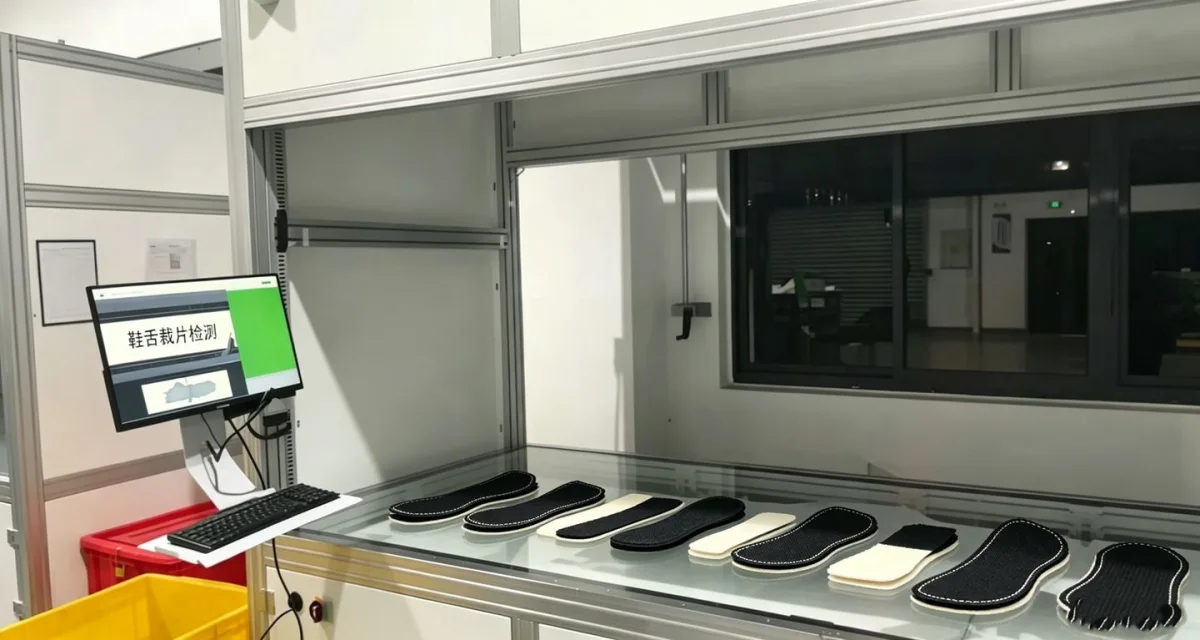
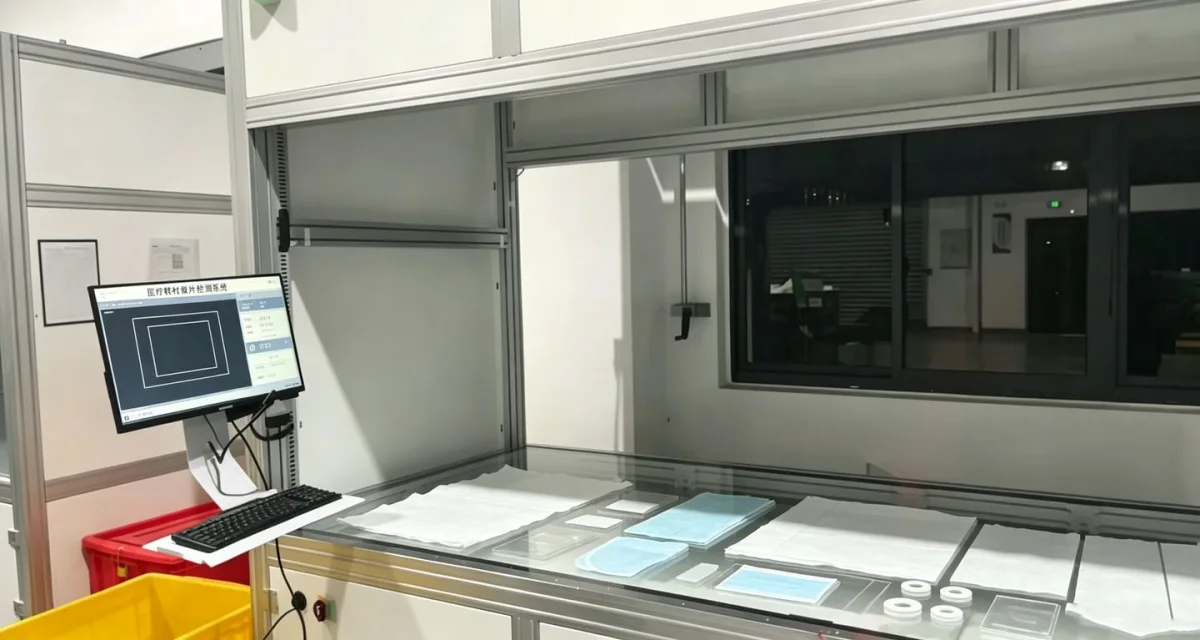
Applicable Type
Warp-knit Mesh Fabric
Regular mesh holes; the focus is on hole regularity
Sandwich Mesh Fabric
Multilayer structure, the focus is on interlayers and holes
Elastic Mesh Fabric
Highly elastic and easily deformed; positioning with anti-stretch control
Mesh Fabric Cut Pieces
Already cut, inspected piece by piece with defect locating
Mesh Fabric Roll Stock
Continuous material feed, line-scan full-width inspection
Common defect
| Defect Types | Typical Manifestations | Inspection Focus Points |
|---|---|---|
| hole | Holes merge or break into openings | Transmitted Light Is the Most Direct |
| Dropped stitches | Missing loops, abnormal holes | Compared against the mesh pitch |
| Mesh Deformation | Holes stretched or abnormally shaped | Stabilize Tension First |
| Snags | Yarn pull-out, exposed filaments | High-contrast Features |
| Stain / Oil Spot | Oil Stains, Color Spots | Contrast Against Base Color |
| color difference | Inconsistent shade within the same batch | Stable Color Reference |
| foreign matter | Stray Fibers, Particles | Distinguish From Mesh Openings |
| Selvedge defects | Web-width edge chipping | Must Cover Full Width |
inspection Workflow
Complete chain from loading to judgment
- 01 Mesh fabric loading / roll unwinding or cut-piece feeding
- 02 Flattening and tension control
- 03 Triggered imaging (transmissive option)
- 04 Mesh hole cycle positioning
- 05 Region segmentation and defect segmentation
- 06 Defect classification and grading
- 07 Dimension / contour judgement (optional)
- 08 Synthesized OK / NG
- 09 Marking / rejection and image archiving
AI Inspection Principles
AI Visual Inspection Principles
Mesh fabric inspection uses the "mesh period" as its datum. The algorithm builds a model of the normal mesh pattern and judges local areas that break the mesh pattern, such as holes, dropped stitches, and mesh deformation, as defects. The precondition is stable loading — stretching deforms the mesh and creates false calls.
For illumination, backlight / transmitted light highlights holes and the hole pattern; diffused light makes stains and color difference visible; low-angle light exposes pulled threads and surface relief. Stains on dark mesh fabric and holes on light mesh fabric need separate lighting setups.
For judgement, we recommend stabilizing the conveying tension and reducing stretching before running the algorithm. Mesh hole tolerance must be measured with OK / NG samples to avoid judging normal hole variation as a defect.
Applicable Industry
Applicable equipment
Common Question
Will mesh deformation cause a false call as a hole?
Is Transmitted-Light Inspection the Most Effective for Holes?
Can Elastic Mesh Fabric Be Inspected?
Can Multilayer Sandwich Mesh Fabric Be Inspected?
What is the inspection accuracy?
What samples are needed to develop a solution?
Can It Be Integrated Into an Existing Production Line?
Submit sample testing
Send us OK and NG samples of mesh fabric in different types and colors, and we will run mesh opening modeling and defect measurements and provide illumination plan and tension control recommendations.
Submitted successfully
We have received your sample testing request. A solution engineer will contact you within 1 business day via contact you.
Need to assess imaging conditions, defect criteria and cycle time item by item? Go to the Full Requirement Assessment →
Send Us Your Material and We Will Show You the Measured Results
Provide several OK and NG samples of the material, and a solution engineer will run actual imaging and judgement tests on the equipment to give a workable inspection configuration recommendation, rather than reading the datasheet alone.