Cut-Piece Inspection System with AI Visual Inspection
In-line inspection of cut pieces and cut panels: dimensions, contour, notch and hole position, plus surface defects, judged against the pattern tolerance.
Solution Overview
Appearance inspection of sheet flexible materials is difficult in flattening and illumination
The cut-piece AI visual inspection solution images sheet-shaped cut parts at the inspection station; algorithms identify defects such as stains, color differences, damage, holes, scratches, and yarn breakage and output OK/NG, and it can be connected directly to an existing production line for automatic rejection. It is suitable for in-line inspection of cut pieces in flexible materials such as garments, automotive interiors, bags and luggage, and footwear materials.
Cut pieces are the most common incoming material form for flexible materials: sheet-like, irregularly shaped, soft, and large in area. These four characteristics combined make cut-piece inspection a typical case of "looks simple, is troublesome in practice".
The difficulty comes mainly from two places. The first is Flatten: fabric wrinkling and curled edges make the same defect appear and disappear from one look to the next; the second is illumination: stains on dark fabric and scratches on light fabric require completely different illumination methods to form a clear image. The algorithm, by contrast, is the relatively certain part.
The engineering focus of this solution is therefore on tooling and optics: bringing each cut piece into the field of view in a consistent pose, and providing switchable illumination methods for different materials.
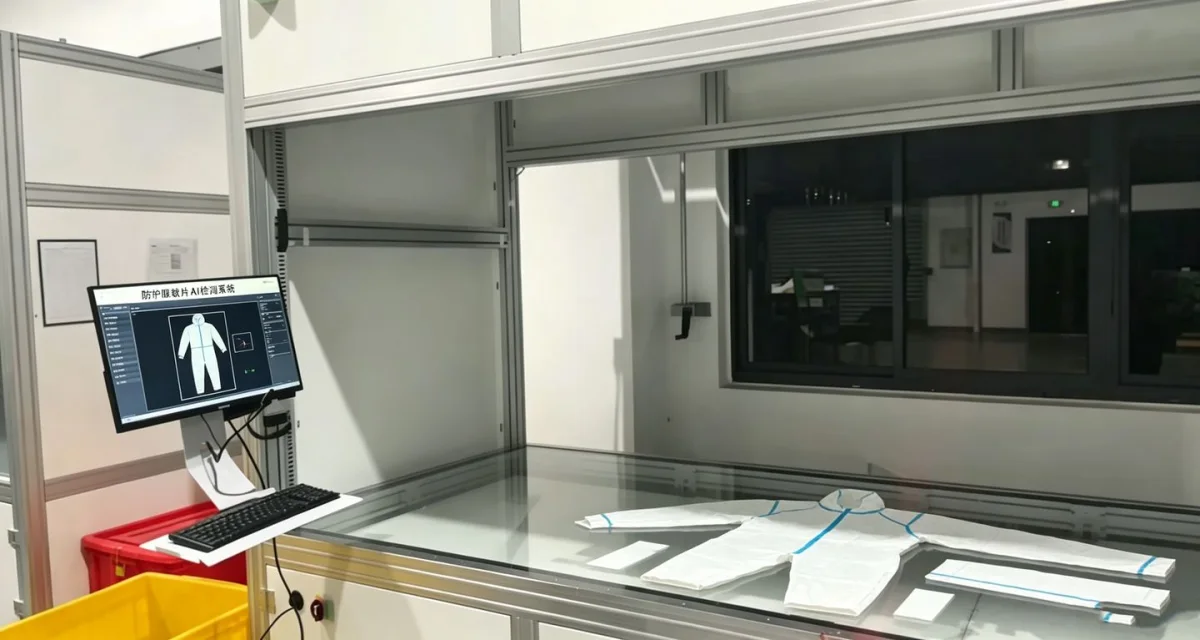
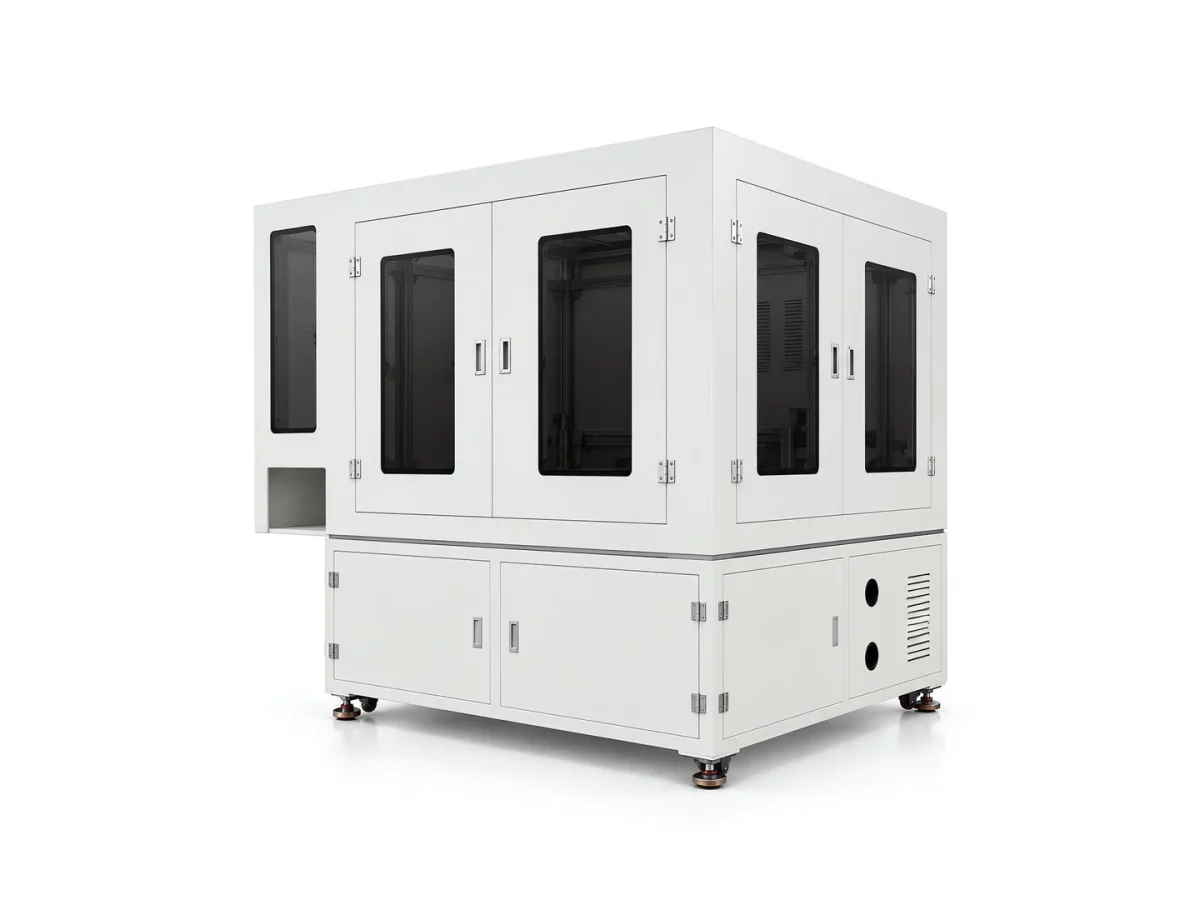
inspection Content
Judgement Items This Solution Addresses
| inspection item | Judgement Item | Remarks |
|---|---|---|
| Surface Defect | Stains, oil stains, color differences, foreign matter | Must be distinguished from the material's natural texture |
| Structural Damage | Damage, holes, short shot | Transmitted-light imaging gives the highest contrast |
| Surface Morphology | Scratches, indentations, wrinkles | Low-angle or striped light forms a clearer image |
| Weaving Defects | Yarn breakage, fuzz, weaving defects | Requires sufficient pixel resolution |
| Outline Contour | Shape mismatch, missing corner, out-of-tolerance dimension | Measurement after positioning (optional) |
| Splicing and Alignment | Seam position, check pattern registration | Requires an established datum first |
inspection Method
- 01 Cut-piece loading / feed into the inspection position
- 02 Flattening and fixing
- 03 trigger capture
- 04 Datum positioning
- 05 Region-based judgement by inspection item
- 06 Combine results into a single OK / NG per piece
- 07 NG Rejection or Marking
- 08 Image and result archiving
Inspection Method Notes
The core of the solution is "stable pose + suitable illumination". The tooling constrains the cut piece into a consistent pose, and the light source makes the target defect features form a clear image; only when both are in place does the algorithm have stable input to work with.
Judgement and interlocking
Judgement strategy is set separately for each defect type. Structural damage (damage, holes) is usually handled as "any occurrence is NG"; surface defects (stains, scratches) are graded by area, length, or contrast, because the business cost differs by grade.
The principle for threshold offset is to look at the cost: escapes cause downstream rework or customer complaints, while over-rejection causes material waste. Whichever side is less acceptable, the threshold is shifted to the other side. This judgement requires your quality department's involvement.
- Set thresholds separately by defect type; do not use a single uniform standard
- Differentiate by area: tighten criteria in critical areas, relax them in non-critical areas
- Critical defects can be configured to stop the machine with an alarm; general defects are only marked
- Judgement results are recorded per piece and images retained for re-judgement and traceability
Related Inspections Objects and Applications
Applicable Industry
Common Question
Where Do Problems Most Often Arise in Cut-Piece Inspection?
Can Dark and Light Fabrics Share One Solution?
Can Dimensions and Appearance Be Inspected at the Same Time?
How are NG parts handled?
How much investment does this solution require?
How long does it take to get a solution?
Submit sample testing
The feasibility of cut-piece inspection depends largely on the actual parts. Please provide samples of different fabrics and different defects, and we will validate imaging and judgement.
Submitted successfully
We have received your sample testing request. A solution engineer will contact you within 1 business day via contact you.
Need to assess imaging conditions, defect criteria and cycle time item by item? Go to the Full Requirement Assessment →
Submit Samples to Get a Visual Inspection Solution
Tell us the workpiece, inspection requirements, production line cycle time and your existing PLC / communication method, and our solution engineers will recommend the inspection method, optical configuration and interlocking solution.