Machine Vision Algorithms and Industrial Operator Library
Select industrial vision operators for OCR, code reading, pattern checks, geometry, anomaly detection and segmentation within a validated inspection flow.
Choose the operator from the inspection question
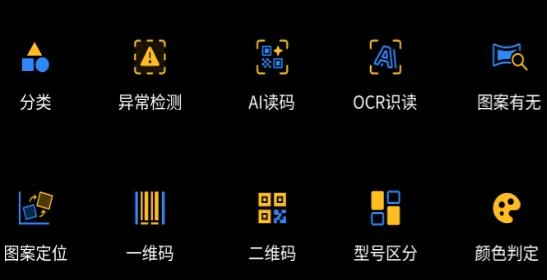
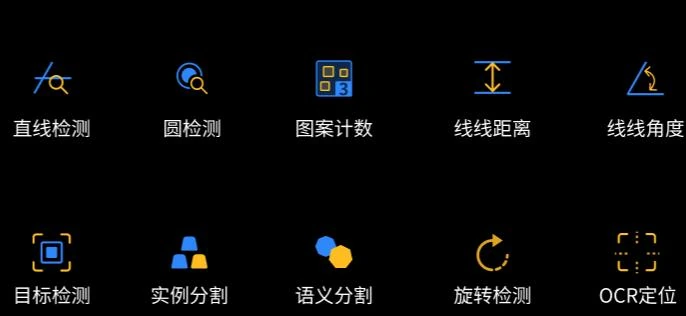
A machine vision flow first acquires usable evidence, then locates features, reads identifiers or applies a learned model. The quality rule converts those outputs into a pass, reject or review result. The following four groups organize 20 documented operators for engineering selection.
Read and identify
- AI code reading
- OCR recognition
- 1D code reading
- 2D code reading
- Model/variant identification
Inspect and compare
- Classification
- Anomaly detection
- Pattern presence
- Pattern counting
- Color judgment
Locate and measure
- Pattern location
- Line detection
- Circle detection
- Line-to-line distance
- Line-to-line angle
- Rotation detection
- OCR localization
Detect and segment
- Object detection
- Instance segmentation
- Semantic segmentation
Combine conventional vision with learned models
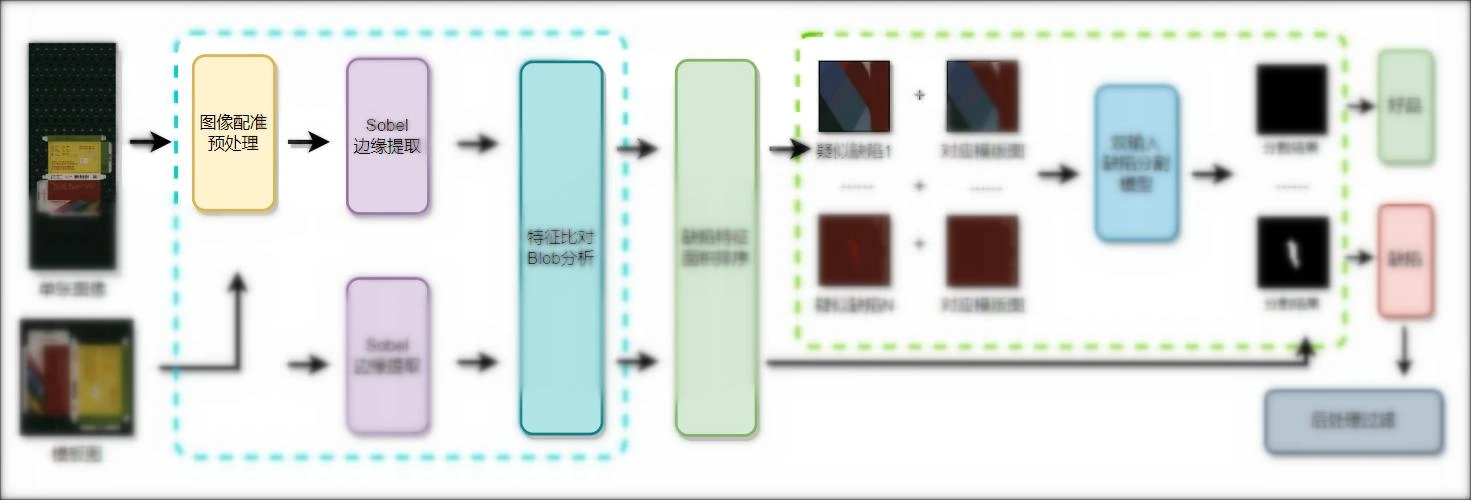
For a repeatable geometry or presence task, a conventional operator may provide a clear, inspectable result. For variable appearance, classification, detection, segmentation or an anomaly model may be appropriate. A flow can locate the part, select an ROI, analyze the feature and compare the result with the specified acceptance rule.
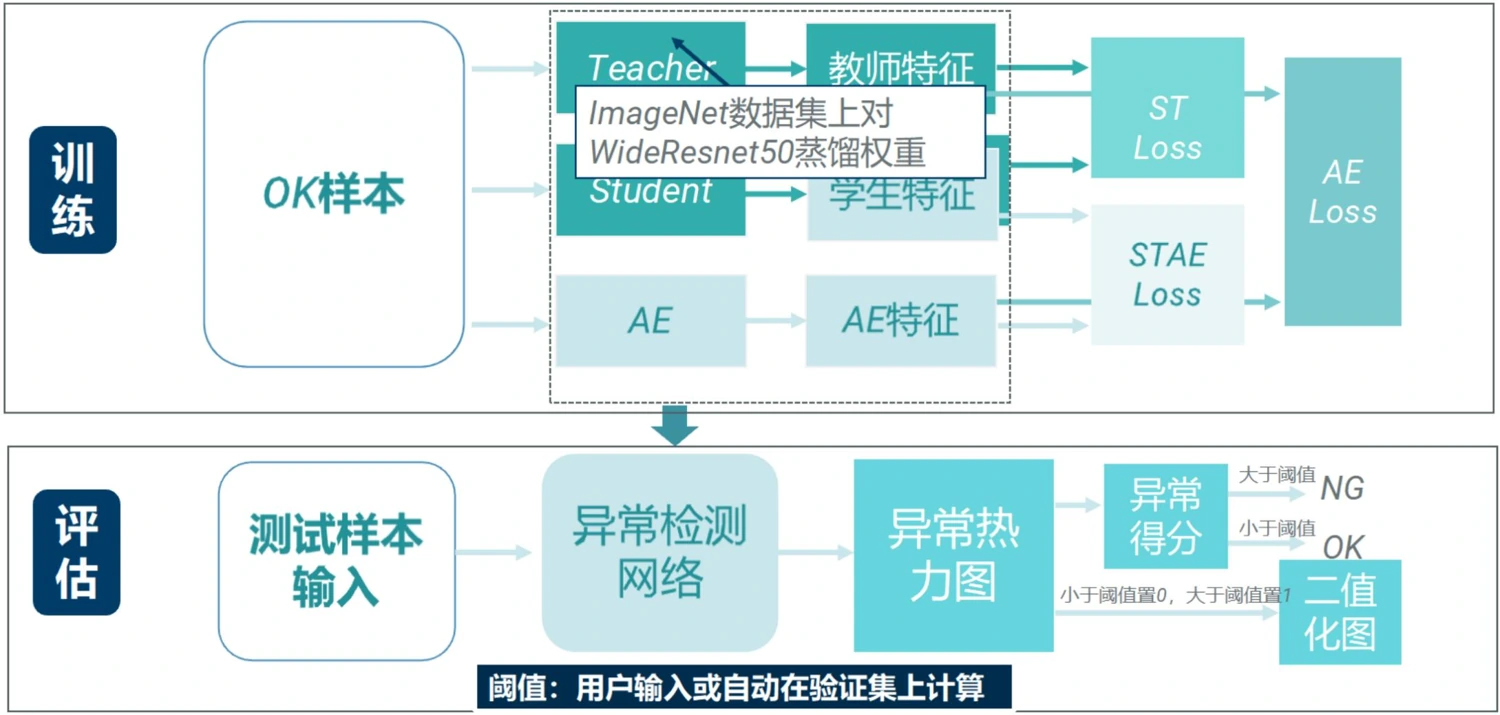
Normal-image anomaly detection
The documented workflow learns from normal images and outputs an anomaly heatmap and score for test images. Normal-sample coverage and independent real-defect tests remain necessary. A score is not a calibrated probability or an automatic reject instruction; threshold selection and uncertain-result handling are part of acceptance.
Fusion and deployment techniques
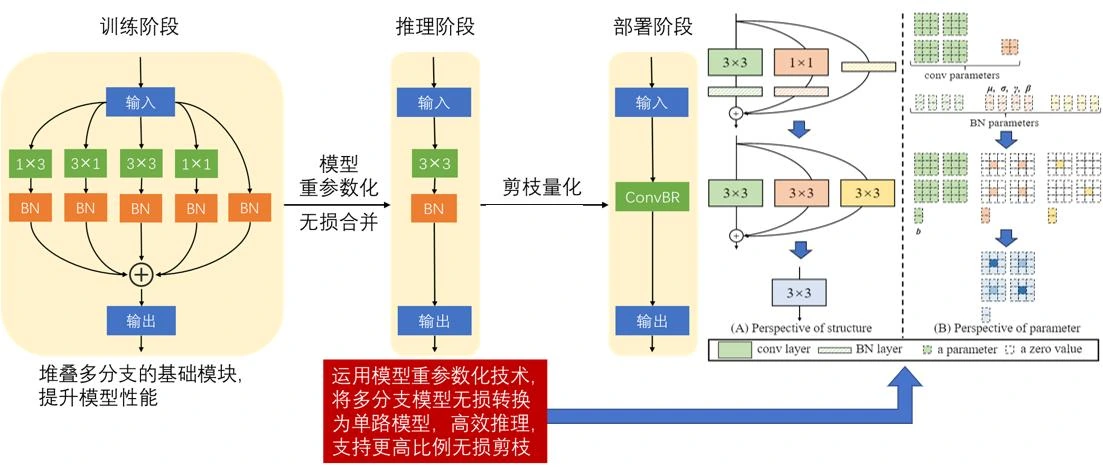
Source diagrams show multi-branch/dual-channel dynamic fusion and a deployment process including training, inference, reparameterization, merging, pruning and quantization. The exact sensors and implementation are not established by the diagrams. A label such as lossless merging does not guarantee unchanged accuracy or faster inference for every model and target.
An extensible node/flow diagram describes a development direction, without proving unrestricted SDK access, arbitrary model import, plug-in compatibility or universal hardware support.
Separate pixels from physical measurements
Pattern, line, circle, distance, angle and rotation outputs need an agreed coordinate system and, for physical dimensions, calibration and a validated measurement method. Pixel sampling, repeatability and measurement accuracy are separate metrics. Check fixtures, part height, optics and reference artifacts under the intended conditions.
View source diagrams and interface examples
Engineering questions
When should we combine rules and deep learning?
Use a representative image trial. Conventional operators can locate or measure stable features while a learned model evaluates variable appearance. Validate the combined flow and decision rule on the same independent sample set.
Can an anomaly model trained on good parts be accepted without defect samples?
Normal images define the learned reference, but real defects and borderline good parts are needed to evaluate escapes, false rejects and thresholds before production use.
Does an operator-library diagram establish hardware compatibility?
No. Confirm the supported software version, operator set, model format, compute target, interfaces and licensing for the proposed configuration.
Connected technologies
Evaluate your inspection task
Send representative good and defective parts or images, acceptance limits, part dimensions, target cycle time, installation constraints and PLC or robot interface details. Include operation video and the SOP for a process-recognition task. Agree the trial, acceptance method and available modules before selecting a production configuration.