Terminal Presence/Absence Inspection
Judges whether terminals are properly installed, correctly positioned, missing or poorly crimped, for wire harness and connector assembly stations.
inspection Overview
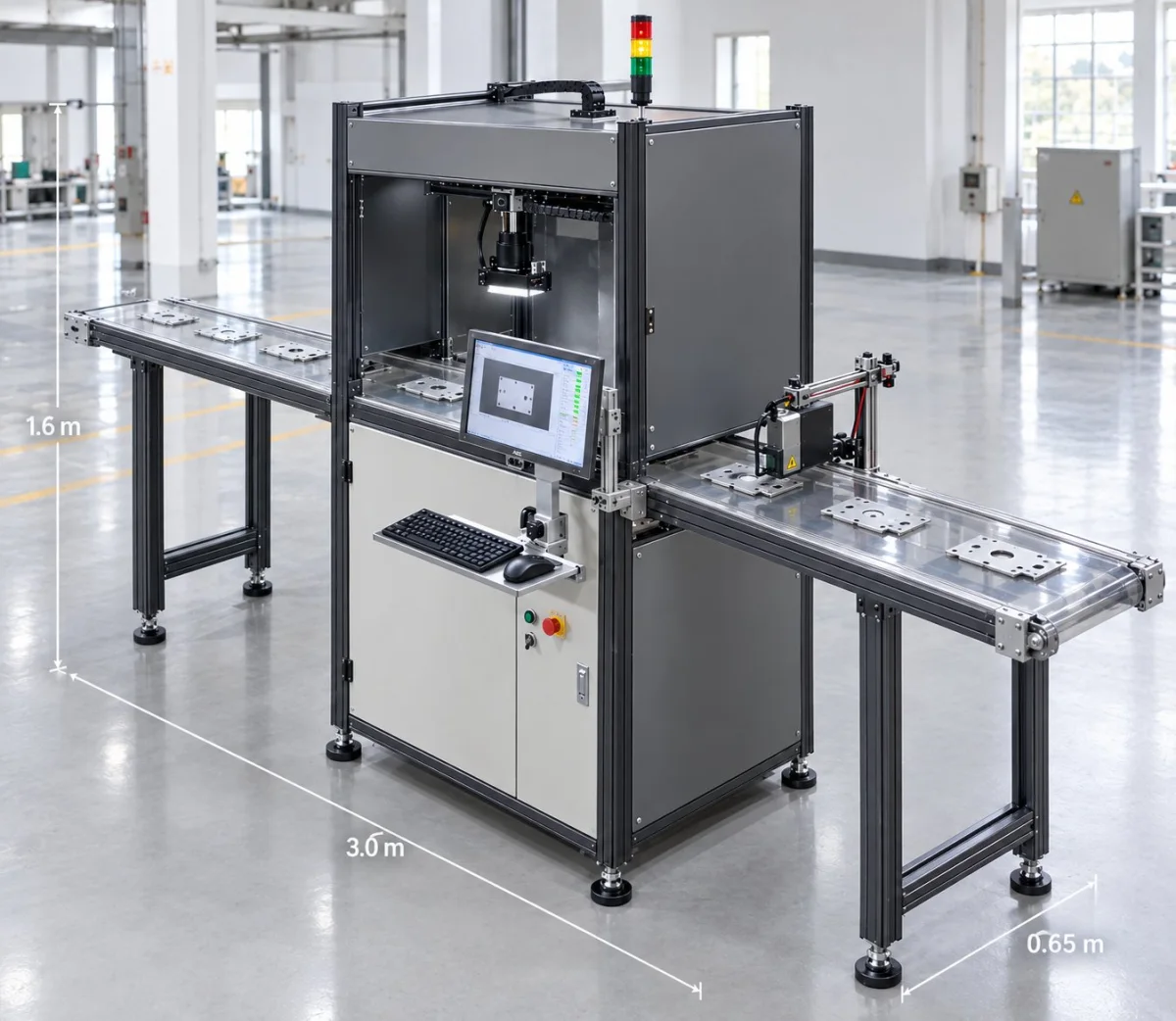
Terminal presence/absence inspection: determine whether terminals are installed correctly, whether their position is correct, and whether any are missing or badly crimped; applicable to wire harness and connector assembly stations. The judgement usually does not check details such as threads or dimensions, but rather determines Whether the visual feature at that position exists and matches expectations, output OK / NG and interlock with the production line.
Verifies whether terminals are fully seated, correctly positioned, missing, or poorly crimped; applicable to wire harness and connector assembly stations.
The feasibility of "terminal presence/absence inspection" depends on Whether the visual features of the object are stable and distinguishable, as well as the on-site optical and tooling conditions. Each item is expanded below in the order commonly used in inspection engineering.
Object Characteristics
How the object appears in the image
- Many structures: plug-in, crimp, solder types and more
- They often appear in groups, so multiple groups must be verified within the same field of view
- Crimp quality involves whether the conductor is exposed and whether the indentation is normal
- Usually brass, tin-plated or nickel-plated with strong reflections
inspection Challenges
Where Problems Really Occur on Site
- Terminal spacing is small, so adjacent terminals tend to merge when grouped
- Crimp quality acceptance criteria are complex, involving metal deformation and conductor visibility
- Wires obstruct the view, making some features invisible
- Wire and terminal combinations vary widely in color
Vision Judgement method
How acceptance criteria are set and why
The acceptance criteria for presence/absence and position are relatively direct: based on Verify each position number on the terminal block one by one, to determine whether a terminal and wire are present at that position.
Judging crimp quality is more complex and usually requires a dedicated viewing angle (to observe the form of the crimp wings and any exposed conductor), making it a separate category of inspection task.
Applicable algorithm
Choose by the Form of the Acceptance Criteria, Not by Complexity
Reference Designator Verification
Judge position by position against the terminal designators to confirm full seating
Classification / Feature Comparison
Used when terminal types must be distinguished or the crimp form must be judged
Optical Precautions
Imaging conditions set the upper limit of feasibility
- Harness stations usually have limited space, so compact camera and light source solutions are needed
- Gold terminals are highly reflective; use diffused light and adjust the angle to avoid specular reflection
- If the crimp shape must be observed, a dedicated straight-on viewing angle and high resolution are required
OK / NG Output
How results are judged and passed to the production line
| Inspection Status | judgement | Interlocking Action |
|---|---|---|
| Terminal and wire fully seated | OK | release |
| Missing part / wrong position present | NG | Block and rework |
| Abnormal crimp shape (optional criterion) | NG | Treat as a defect |
Applicable Industry
This type of inspection is common in the following industries
Common Question
The most common questions about this object
Can All Terminals on a Wiring Harness Be Inspected?
Yes, but the variation in wire harness form has to be considered: a flexible wire does not hold a fixed pose, so tooling or a locating feature is needed to stabilize the viewpoint first, and then the verification is done by position number. The softer the harness, the more critical the role of the tooling.
Can Crimp Quality Also Be Inspected at the Same Time?
Crimp quality is a different class of criterion and usually needs a dedicated viewing angle and higher resolution; it is often not done at the same station as "terminal presence/absence". The two requirements should be evaluated separately.
What are the acceptance criteria for this object?
Presence/absence and position criteria are relatively direct: verify position by position against the numbering on the terminal block, judging whether a terminal and its wire exist at that position.
What are the illumination requirements for this type of object?
Harness stations usually have limited space, so compact cameras and light source solutions must be chosen. Gold terminals are highly reflective, so diffused light is recommended with the angle adjusted to avoid specular reflection.
What Are the Inspection Accuracy and Minimum Detectable Size?
It depends on the combination of field of view and camera resolution, and is affected by the lens, illumination and algorithm. To be added — the configuration must be derived from your minimum defect size, subject to the results of a measured sample trial.
How Do We Verify That Our Product Can Be Detected?
Please provide a correctly assembled wiring harness sample along with samples with missing terminals and wrong positions, and state whether crimp quality needs to be judged.
Submit sample testing
Please provide a correctly assembled wiring harness sample along with samples with missing terminals and wrong positions, and state whether crimp quality needs to be judged.
Submitted successfully
We have received your sample testing request. A solution engineer will contact you within 1 business day via contact you.
Need to assess imaging conditions, defect criteria and cycle time item by item? Go to the Full Requirement Assessment →
Send Us Your Workpiece and We Will Show You the Measured Results
Provide several OK and NG samples, and the solution engineer will run actual imaging and judgement tests on the equipment, then give inspection configuration recommendations that can be implemented, rather than just reading a specification table.