Inspection of Flexible and Soft Materials
Inspection of flexible and soft materials where the part cannot be held flat: fabric, non-woven, foam, film and laminated material on a conveyor.
Solution Overview
Common challenges with flexible materials: the material moves, the texture misleads, and reflections are inconsistent
The flexible material AI visual inspection solution addresses the characteristics of soft materials such as fabric, leather, foam, film, and tape. Through pose constraint, switchable illumination, and adapted algorithms it identifies surface defects and structural defects, outputs OK/NG, interlocks with the production line, and replaces manual visual inspection.
"Flexible material" is not a material category but a class of Common Challenges the collective term. These materials share four characteristics: they deform, they are elastic, their texture is often random, and their surface reflection properties are inconsistent. These four points correspond respectively to four categories of engineering problem.
It deforms → the image changes and the same defect is sometimes there and sometimes not; it is elastic → the tension state affects its shape; the texture is random → a threshold method will inevitably produce many false calls; the reflection is inconsistent → a single illumination can hardly cover all defect types.
The value of this solution is not a universal algorithm, but rather systematizing how these problems are handled: pose constraint, tension control, multiple illumination combinations, and anomaly detection based on the distribution of normal samples.
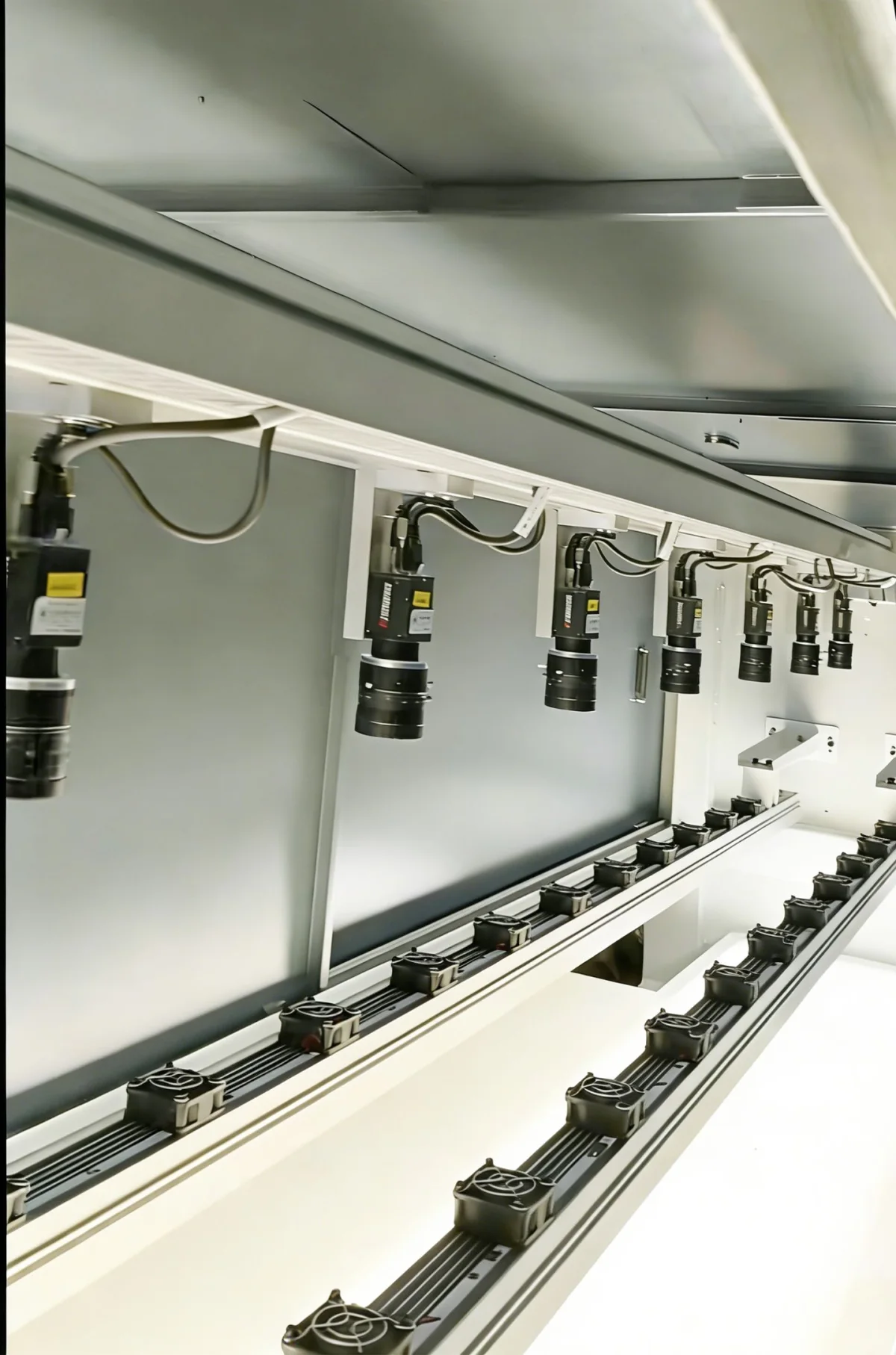
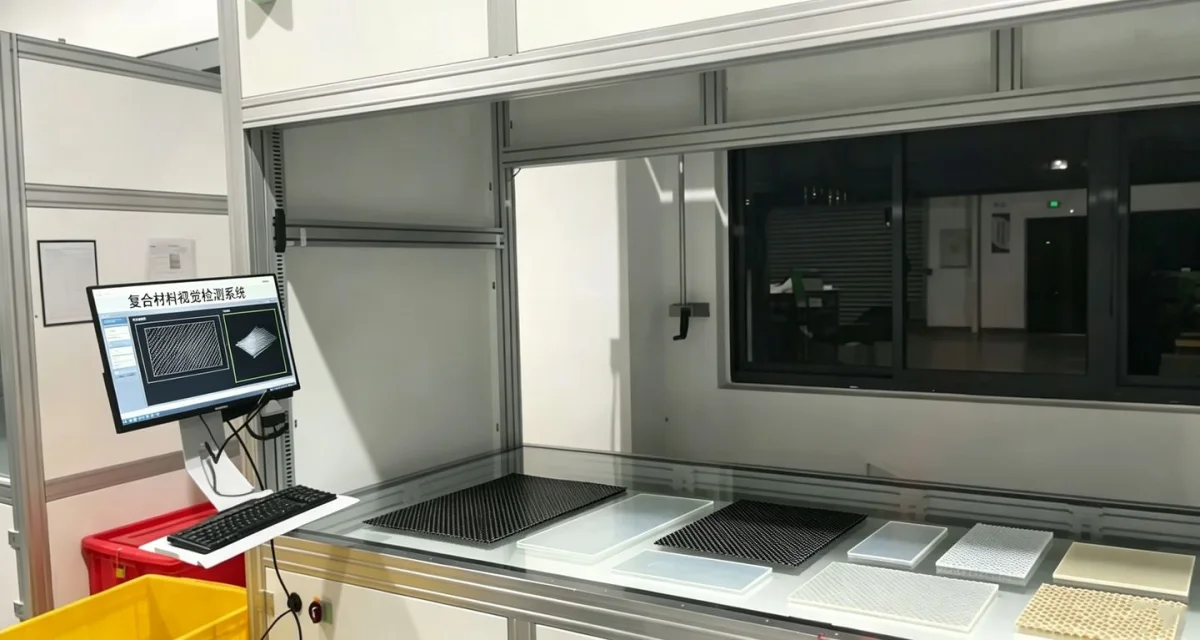
inspection Content
Judgement Items This Solution Addresses
| inspection item | Judgement Item | Remarks |
|---|---|---|
| Surface Stains | Oil spots, water marks and color patches | Must be distinguished from random texture |
| color difference | Color differences between batches and between pieces | Requires a stable light source and white balance reference |
| Holes and Damage | Holes and tears visible in transmitted light | Transmitted Light Imaging |
| Scratches and Indentations | Linear damage, pits | Low-angle / stripe lighting |
| Wrinkles and Deformation | Wrinkling, tensile deformation | Shape-related defects, requires pose constraint support |
| Fuzz and Fibers | Exposed fibers, protruding fibers | Distinguished from normal fuzz |
| foreign matter | Particles, adhesive beads, debris | Distinguished from material texture |
| Contour and Dimensions | Outline, width, spacing | Measurement after positioning (optional) |
inspection Method
- 01 Material Loading
- 02 Pose constraint / tension control
- 03 Multi-mode illumination imaging
- 04 Datum positioning
- 05 Defect inspection and classification
- 06 Dimension and contour judgement (optional)
- 07 Result Composition OK / NG
- 08 NG Rejection or Marking
- 09 Data Recording
Inspection Method Notes
The recommended engineering order for a flexible material solution is: solve the pose first, then the illumination, and tune the algorithm last. If the order is reversed, the situation arises where "no amount of algorithm tuning makes it stable" — because the input image itself is unstable, and no algorithm, however strong, can help.
Judgement and interlocking
Judgement thresholds for flexible materials cannot simply copy the approach used for rigid parts. Rigid parts allow absolute gray-scale thresholds, but the texture of flexible materials itself fluctuates, so the algorithm must first learn the "normal distribution of conforming products" and then identify regions that deviate significantly.
This comes with a precondition: A sufficient number of qualified samples is required take part in modeling. If there are only a few samples, no solution can guarantee stability.
- Thresholds should be set from the distribution of qualified samples, not from absolute gray level
- Defect grades must be defined together with the quality department
- Pose constraint is a precondition for judgement stability
- Insufficient qualified samples directly limit the ceiling of the solution
Related Inspections Objects and Applications
Applicable Industry
Common Question
Why is inspecting flexible materials harder than inspecting rigid parts?
How many qualified samples are needed?
How many materials can one machine cover?
Are inspection results stable?
Can It Detect All Types of Defects?
What Information Do You Need to Provide?
Submit sample testing
The ceiling of a solution for flexible materials is determined by the actual samples. Please provide sufficient OK samples and NG samples with defects, and we will validate imaging and judgement.
Submitted successfully
We have received your sample testing request. A solution engineer will contact you within 1 business day via contact you.
Need to assess imaging conditions, defect criteria and cycle time item by item? Go to the Full Requirement Assessment →
Submit Samples to Get a Visual Inspection Solution
Tell us the workpiece, inspection requirements, production line cycle time and your existing PLC / communication method, and our solution engineers will recommend the inspection method, optical configuration and interlocking solution.