Inspection of Web and Roll Material
In-line inspection of material on a roll - coating, film, foil and laminate - for pinholes, coating gaps, streaks and width deviations.
Solution Overview
For continuous material feed, use line-scan imaging for full-area inspection
The roll-material AI visual inspection solution uses a line-scan camera to image the full width of continuously moving web, detecting holes, foreign matter, uneven coating and scratches. It outputs defect types and web-length coordinates, supports inline labeling or interlocked rejection, and is suitable for film, non-woven fabric, paper and laminated roll materials.
The fundamental difference between roll stock and sheet stock is The material moves continuously. This implies two things: the camera must image in line-scan mode, and defects must be recorded in "roll-length coordinates", otherwise downstream cannot find where the defect is at all.
Another feature of roll material inspection is High Speed Requirement. Production lines usually run material continuously, so inspection must keep up; the higher the speed, the shorter the exposure time, and the greater the demand on light source brightness. These three constrain one another.
The core of a roll material solution is therefore: at a given speed, use sufficient brightness and a suitable imaging method to image the target defects clearly and record their positions accurately.
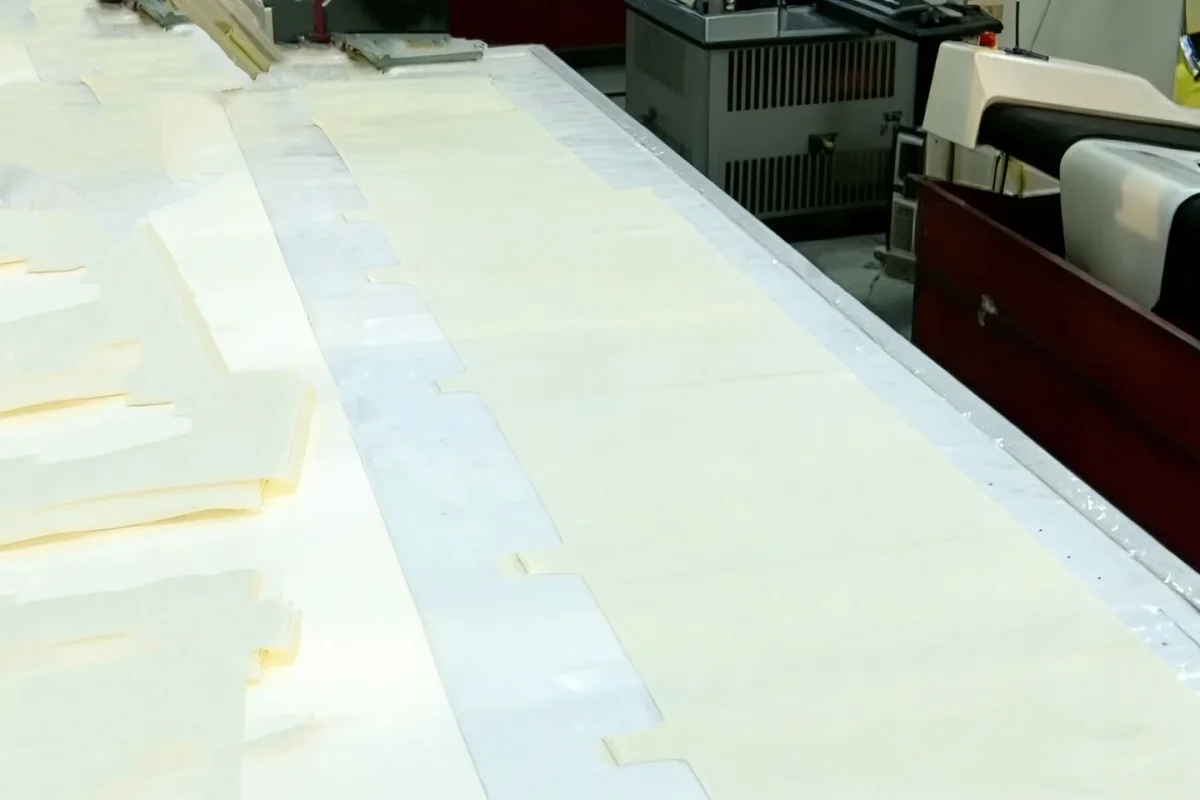
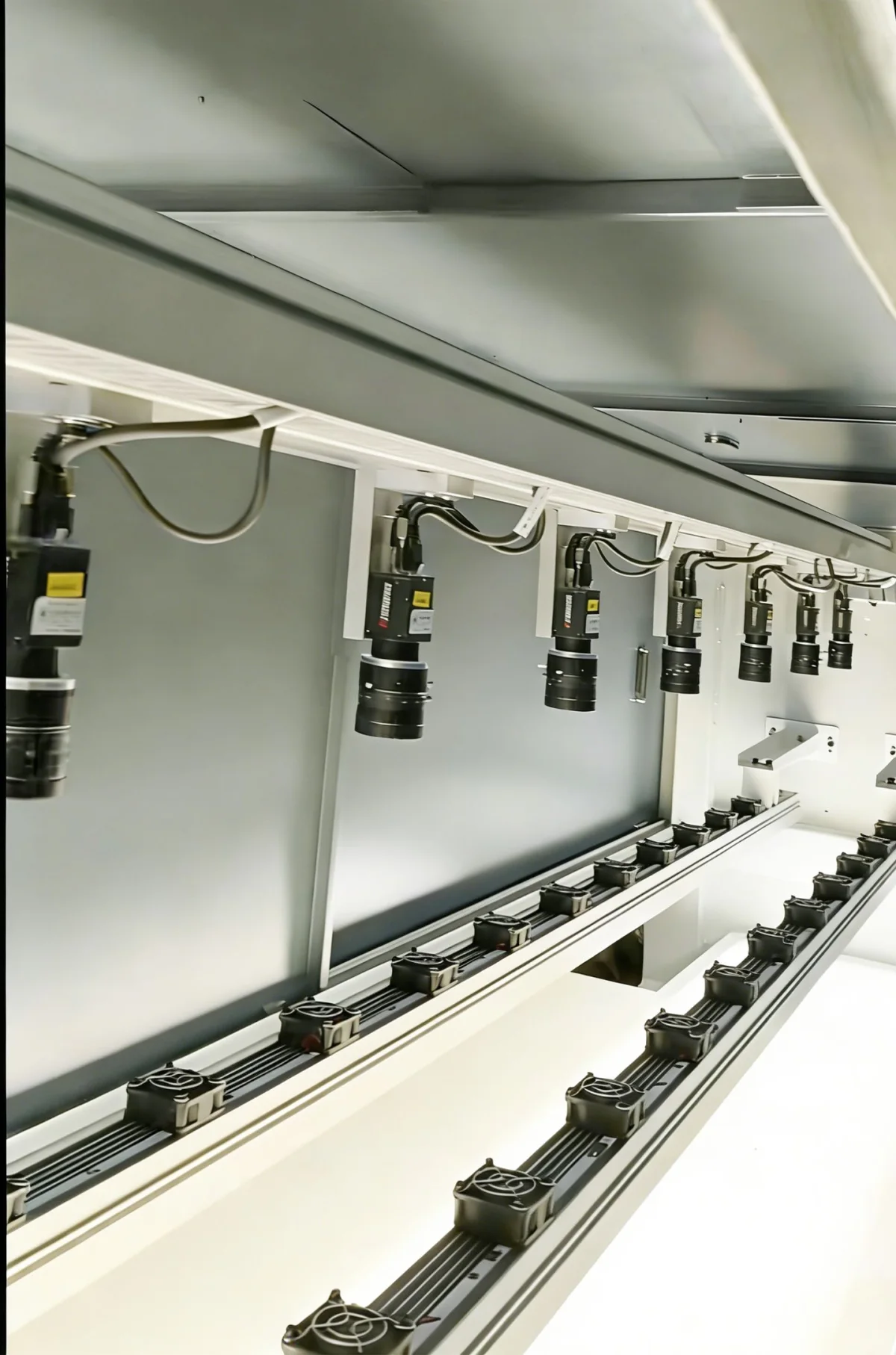
inspection Content
Judgement Items This Solution Addresses
| inspection item | Judgement Item | Remarks |
|---|---|---|
| Holes and Tears | Holes, tears and short shot visible in transmitted light | Line scan + backlight gives the highest contrast |
| Foreign Matter and Impurities | Mixed-in particles, fibers and glue beads | Must be distinguished from the material texture |
| Coating Application and Coating Layer | Missed coating, uneven thickness, streaks | Requires a stable illumination datum |
| Scratches and Indentations | Surface linear damage, pits | Low-angle Lighting |
| Stains and Color Differences | Oil spots, water marks, color patches, batch-to-batch color difference | Must be distinguished from natural texture |
| Edge and Width | Web width, uneven edges, burrs | Measured After Positioning |
| Thickness anomaly (trend) | Local thickness variation | 2D imaging can only reflect a trend; accurate thickness measurement requires a dedicated thickness gauge |
inspection Method
- 01 Roll Unwinding
- 02 Tension and deviation correction control
- 03 Continuous imaging with a line-scan camera
- 04 Real-time defect inspection
- 05 Defect position converted to roll-length coordinates
- 06 Defect classification and statistics
- 07 Inline labeling or interlocked rejection
- 08 End-of-roll report output
Inspection Method Notes
Web inspection uses a line scan camera to image line by line, "stitching" continuous motion into one complete image. The cross-direction position of a defect comes from the pixel coordinates and the machine-direction position from the encoder's length count — combining the two allows a defect to be located precisely on the web.
Judgement and interlocking
Web inspection judgement goes beyond "is it a defect" and must also consider "where the defect is and how often it recurs at the same position". Some defects are continuous (for example coating streaks) and some are discrete (for example holes), and the two call for completely different handling strategies.
The "judgement unit" also needs to be clarified: whether judgement is per piece, per meter, or by statistical grade per roll. Many disputes arise because the judgement unit was not aligned in advance.
- Count and handle continuous defects separately from discrete defects
- Defect positions are converted to roll-length coordinates, making downstream locating and cutting out easier
- Supports quality reports and defect distribution maps output per roll
- The judgement unit (per piece / per meter / per roll) must be defined in advance
Related Inspections Objects and Applications
Applicable Industry
Common Question
Why must position always be recorded in roll material inspection?
Material runs fast, can inspection keep up?
What If the Area Is Very Wide?
Does tension fluctuation in roll material affect inspection?
Can It Interlock Directly with Cutting or Rejection?
What Information Do You Need to Provide?
Submit sample testing
Roll material inspection can only be validated with actual roll stock that contains defects. Please provide roll samples containing typical defects and your speed requirement, and we will carry out line-scan imaging and detection validation.
Submitted successfully
We have received your sample testing request. A solution engineer will contact you within 1 business day via contact you.
Need to assess imaging conditions, defect criteria and cycle time item by item? Go to the Full Requirement Assessment →
Submit Samples to Get a Visual Inspection Solution
Tell us the workpiece, inspection requirements, production line cycle time and your existing PLC / communication method, and our solution engineers will recommend the inspection method, optical configuration and interlocking solution.