How Vision System OEM and ODM Help Companies Enter the Market Faster
How Vision System OEM and ODM Help Companies Enter the Market Faster
In the high-tech hardware industry, many companies face the same problem: they have the technology and they have the product, but how to enter the market quickly and achieve stable delivery remains the biggest challenge. For vision systems, the value of the OEM and ODM models is that they help companies combine R&D capability, manufacturing capability and supply chain capability more efficiently, taking a product from concept to mass production.
The advantage of OEM lies in customization to requirements, which suits customers with clear specifications and brand positioning; the advantage of ODM lies in rapid development based on a mature platform, which suits companies that want to shorten time to market. For vision systems, these two models are not a simple outsourcing relationship but a system coordination relationship. What customers need is not just a supplier, but a partner that understands product logic, market rhythm, and engineering constraints.
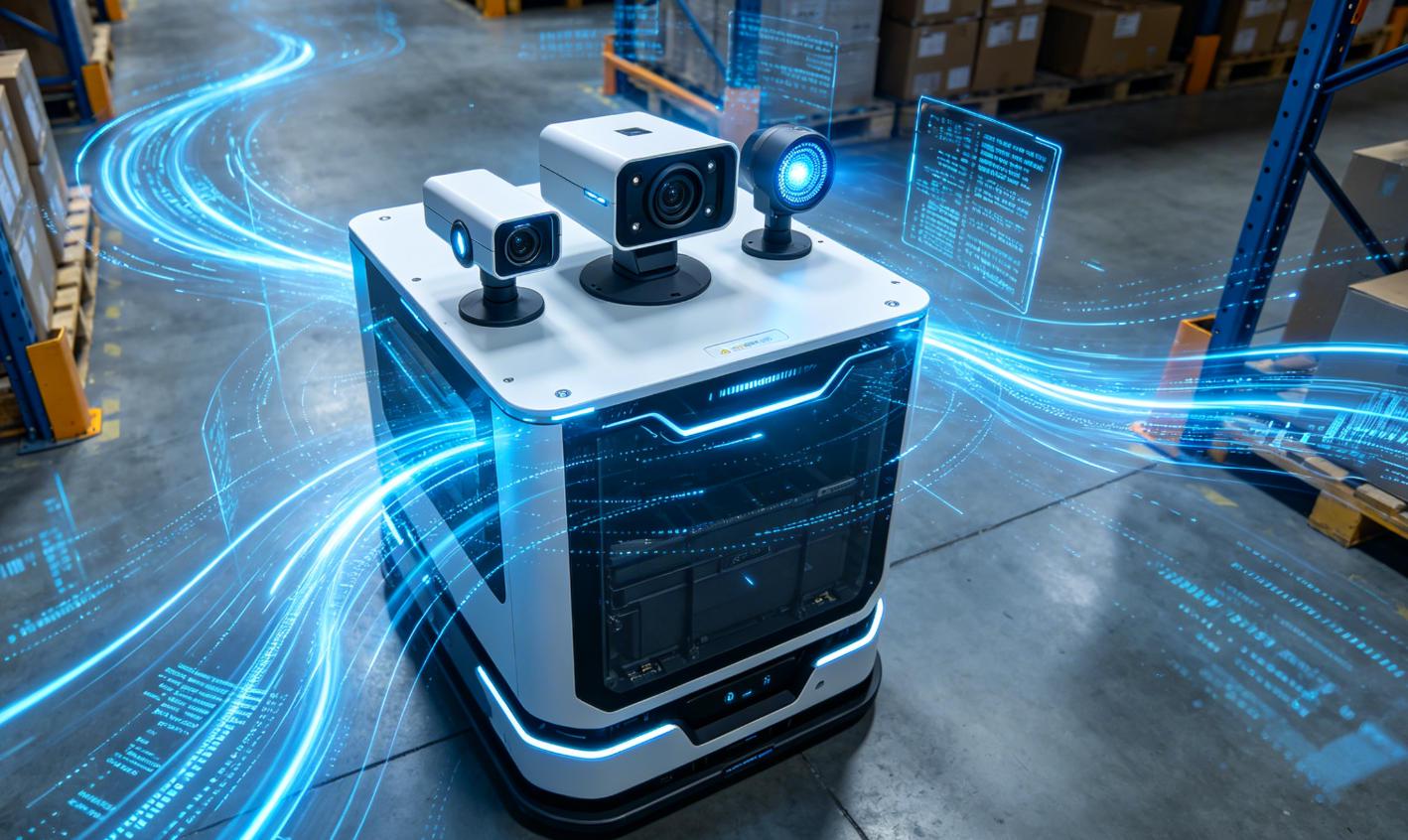
Vision system products often involve multiple disciplines: optics, electronics, algorithms, mechanics, testing and manufacturing. If these are handled separately by different teams, problems such as inconsistent interfaces, long debugging cycles and unstable mass production easily arise. The real value of OEM/ODM is integrating these scattered capabilities into a unified process, reducing communication overhead, improving development efficiency and maintaining consistency in later delivery.
For startups or companies from other industries, the ODM model is especially important. Many customers have a clear application scenario but no complete engineering team for vision products. In that case, leveraging a mature vision platform allows prototype validation, customer testing and volume introduction to be completed faster. This saves development cost, validates market feedback earlier and lets resources be focused on the core business.
EEK emphasizes deep OEM / ODM customization capability on its website, which means it focuses not only on the product itself but also on the customer's project stage, target market and delivery schedule. A good partner does not do everything for the customer; it helps the customer bring a product to market in less time and along a more stable path. For vision system projects, this way of working together is often more valuable than buying individual components.
Future market competition will place increasing emphasis on speed and quality together. Whoever can turn technology into products faster is more likely to seize the window of opportunity; whoever can maintain stable delivery while launching quickly is better able to build brand and reputation. OEM and ODM are not just production methods — they are accelerators that help companies turn technical value into market value.
From the perspective of project execution, what vision system OEM and ODM fear most is not failing to build a function, but requirements, structure, algorithms, testing, and manufacturing being advanced separately. Only when requirement definition, prototype development, trial production introduction, and mass production coordination are placed in one chain can a solution have a chance to perform consistently in a real environment. For a company, the truly difficult part is never "making a sample", but turning a sample into a product that can be reproduced repeatedly and run over the long term.
For customers, turning technology faster into deliverable, customizable products is the core value of the vision system. Many projects look good at the demonstration stage, but once they reach the site, what decides success or failure is often stability, maintainability, upgradability and delivery pace. That is exactly why a vision system cannot be chosen on single-point performance alone; it must also be judged on whether it can handle long-standing engineering problems such as project cycles, supply chain collaboration and multiple rounds of validation.
EEK emphasizes OEM/ODM, advanced manufacturing, and engineering implementation precisely so that vision system OEM and ODM do not remain at the concept level but move faster into trial production, mass production, and continuous optimization. For companies that want to build product strength in smart cars, robotics, industrial manufacturing, or unmanned logistics, this closed-loop capability from R&D to delivery is often more important than the highlights of a single demo, and it is more decisive for how far the business can go.
If the project is broken down further, three points usually deserve the most attention during implementation: first, whether the requirement boundary is clear; second, whether there is a defined validation path between prototype and trial production; third, whether problems can be quickly located and closed into a loop after mass production. Many vision projects get stuck, not on the algorithm itself, but on these engineering details. Addressing these issues up front makes project execution much smoother.
From the perspective of long-term cooperation, vision system OEM and ODM is not a one-time purchase but a continuously iterating product capability. The industry is changing, customer requirements are changing, and scenario constraints are changing; a truly competitive solution must be able to upgrade along with the business. For a company, choosing a partner that understands both technology and delivery means every subsequent upgrade will save more time and cost and more easily build a stable reputation.