Why Vision Projects Must Combine R&D Validation and Manufacturing Validation
Why vision projects must combine R&D validation and manufacturing validation
Many projects fail not because the technical direction is wrong, but because R&D validation and manufacturing validation are handled in isolation. The R&D team focuses on whether the function is implemented, the manufacturing team focuses on whether the product is stable, while what the customer really cares about is whether the product can keep working under mass production conditions. This is especially true for vision systems, because their requirements for detail and consistency are higher than those of many traditional hardware products.
If the R&D stage pursues only performance metrics without considering assembly tolerances, the calibration workflow, supply chain stability, and testing efficiency in advance, problems are easily exposed once the product enters trial production. For example, the same solution may perform excellently in the laboratory, but once a different batch of material or a different process cycle time is used, the results fluctuate noticeably. This shows that if R&D validation is not synchronized with manufacturing validation, risks are deferred until they erupt all at once later.
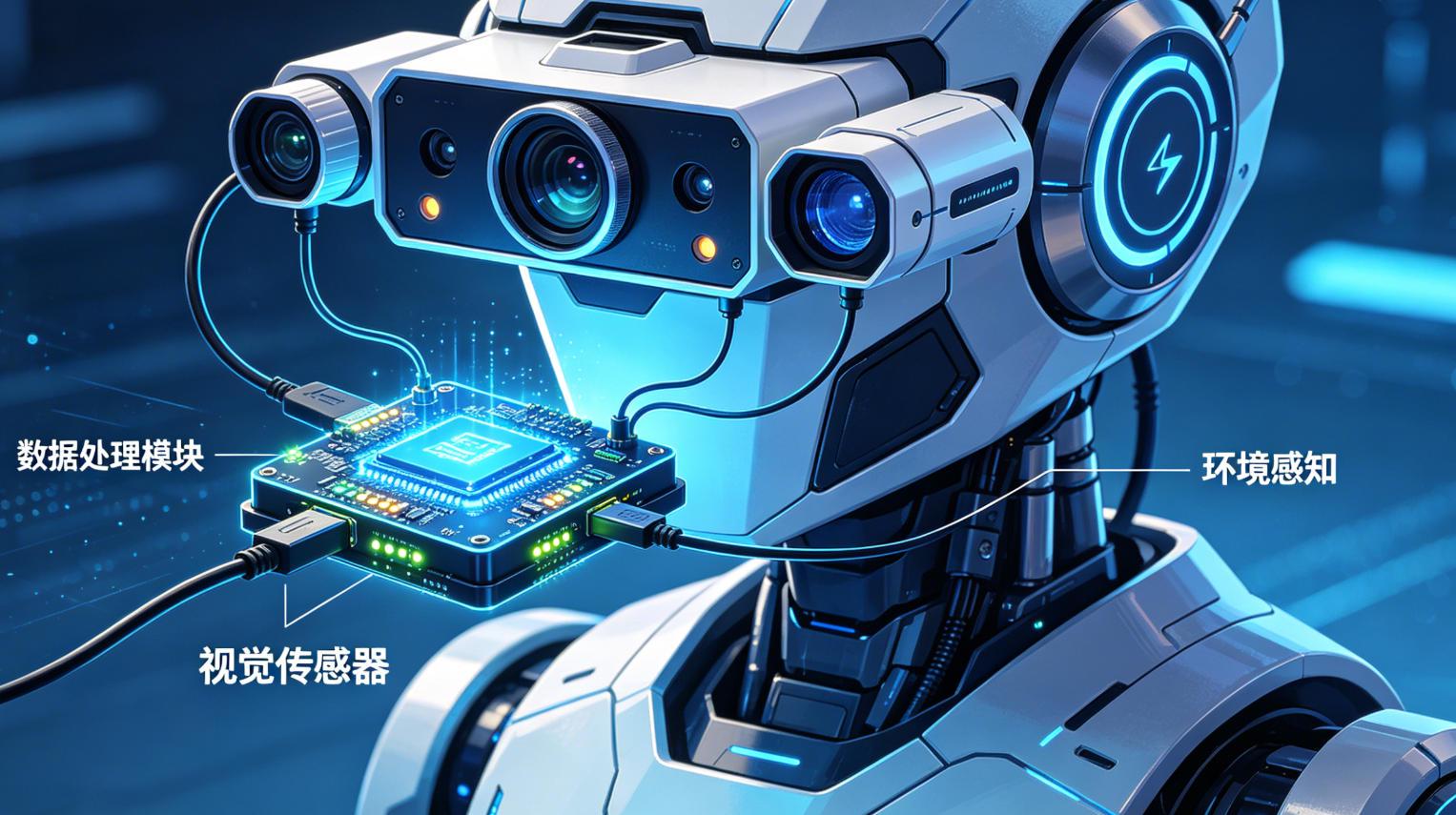
Putting the two together means that engineering implementation and mass production conditions must be considered at the same time during solution design. Selection looks not only at performance but also at manufacturability; structural design looks not only at appearance but also at assembly efficiency; algorithm development looks not only at accuracy but also at actual noise and hardware differences. This development approach exposes problems earlier; although it looks more cautious, overall it actually saves time and cost.
For customers, the most direct benefit of R&D and manufacturing collaboration is more controllable delivery. Problems are found faster during trial production, cycle time is stabilized faster in mass production, and later upgrades can return to a unified standard more smoothly. Especially in scenarios with extremely high stability requirements such as automotive, industrial and logistics, this collaborative capability often determines whether a project can ultimately be scaled up.
EEK emphasizes R&D and manufacturing collaboration and engineering execution, which shows it understands that the real difficulty of a vision project is not "building a prototype" but "turning the prototype into a stable product". This is also why more and more customers value systematic collaboration rather than single-point technology alone. Only when R&D and manufacturing participate together is a vision project more likely to evolve from a one-off solution into a long-term, sustainable product line.
In the future, the industry's demands on vision systems will only grow, and excellence in one part alone is no longer enough. Moving validation earlier, bringing manufacturing into the design, and treating mass production as part of the product are the marks of a truly mature vision project. Putting R&D and manufacturing together does not add complexity; it reduces the complexity that cannot be controlled in the future.
From the perspective of project execution, what a vision project fears most is not failing to build a function, but requirements, structure, algorithms, testing, and manufacturing being advanced separately. Only when R&D validation and manufacturing validation are advanced in sync within one chain can a solution have a chance to perform consistently in a real environment. For a company, the truly difficult part is never "making a sample", but turning a sample into a product that can be reproduced repeatedly and run over the long term.
For customers, reducing the gaps between prototype, trial production and mass production is the core value of the vision system. Many projects look good at the demonstration stage, but once they reach the site, what decides success or failure is often stability, maintainability, upgradability and delivery pace. That is exactly why a vision system cannot be chosen on single-point performance alone; it must also be judged on whether it can handle long-standing engineering problems such as inconsistency between prototype performance and real production line conditions.
EEK emphasizes OEM/ODM, advanced manufacturing and engineering execution precisely so that vision projects do not stay at the concept stage but move faster into trial production, mass production and continuous optimization. For companies that want to build product strength in smart vehicles, robotics, industrial manufacturing or unmanned logistics, this closed-loop capability from R&D to delivery is often more important than the highlights of a single demonstration, and it does more to determine how far the business can go.
If the project is broken down further, three points usually deserve the most attention during implementation: first, whether the requirement boundary is clear; second, whether there is a defined validation path between prototype and trial production; third, whether problems can be quickly located and closed into a loop after mass production. Many vision projects get stuck, not on the algorithm itself, but on these engineering details. Addressing these issues up front makes project execution much smoother.
From the perspective of long-term cooperation, a vision project is not a one-time purchase but a continuously iterating product capability. The industry is changing, customer requirements are changing, and scenario constraints are changing; a truly competitive solution must be able to upgrade along with the business. For a company, choosing a partner that understands both technology and delivery means every subsequent upgrade will save more time and cost and more easily build a stable reputation.